 ADA FLOOR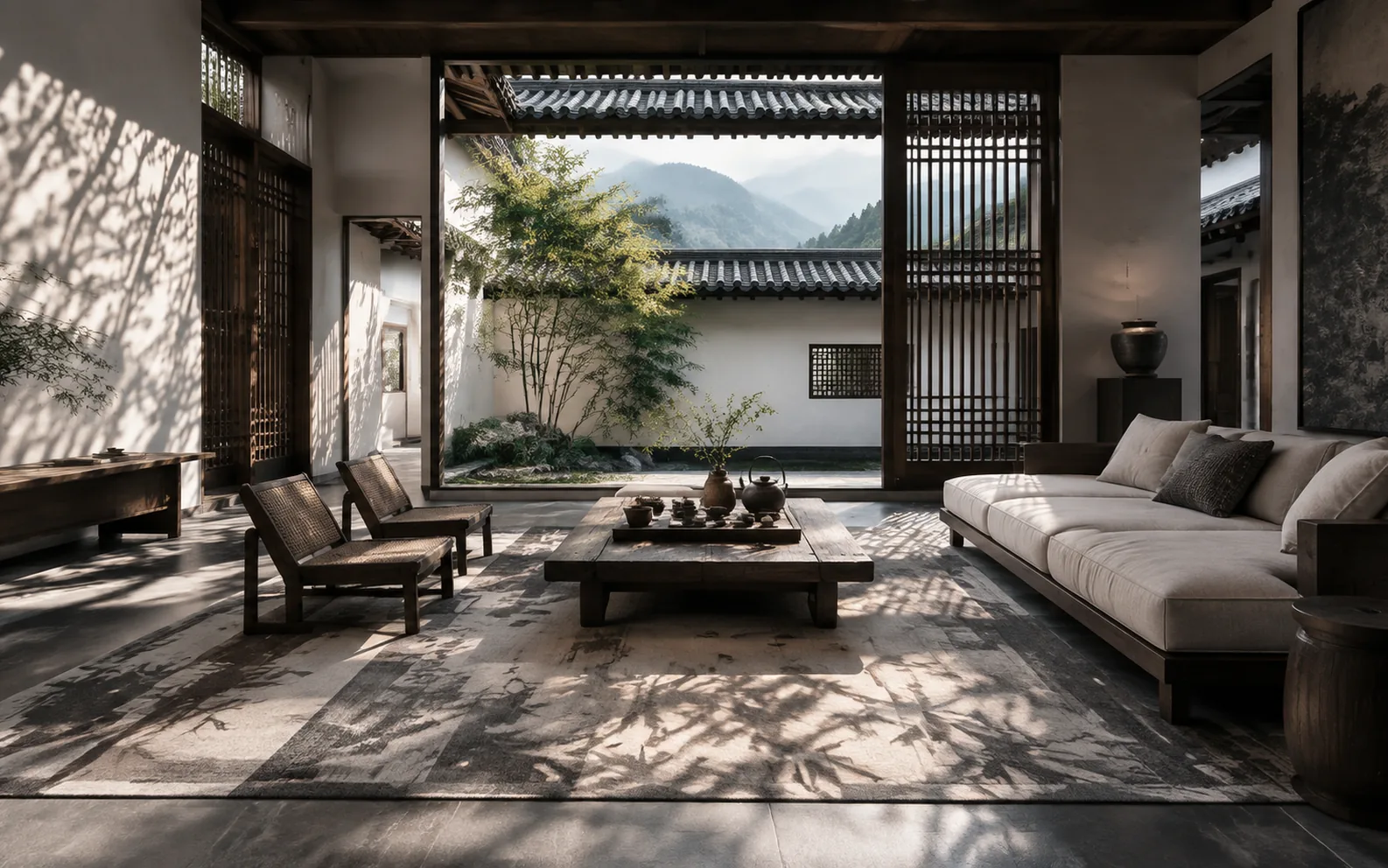
Huizhou architecture leaves a carpet designer three colours, white, black, grey, plus one wood tone. ADA FLOOR developed, sampled and produced these carpets, every pattern hand-tufted sheet by sheet, across the 127 suites and villas that opened in 2015 and the Phase II completed in 2019; two deliveries done, the three layers of white, wood and ink still read separately.
The white walls spoke first
Banyan Tree Huangshan opened at Hongcun in Yixian in 2015, 127 suites and villas set between horse-head walls, with Phase II completed in 2019. Huizhou aesthetics is a whole system of restraint, and it leaves a carpet three layers, white, wood and ink. Bringing a hue of its own would be bad manners. The tighter the constraint, the more the craft shows, which is why the brief reads as a list of what may not be added rather than a description of an effect.
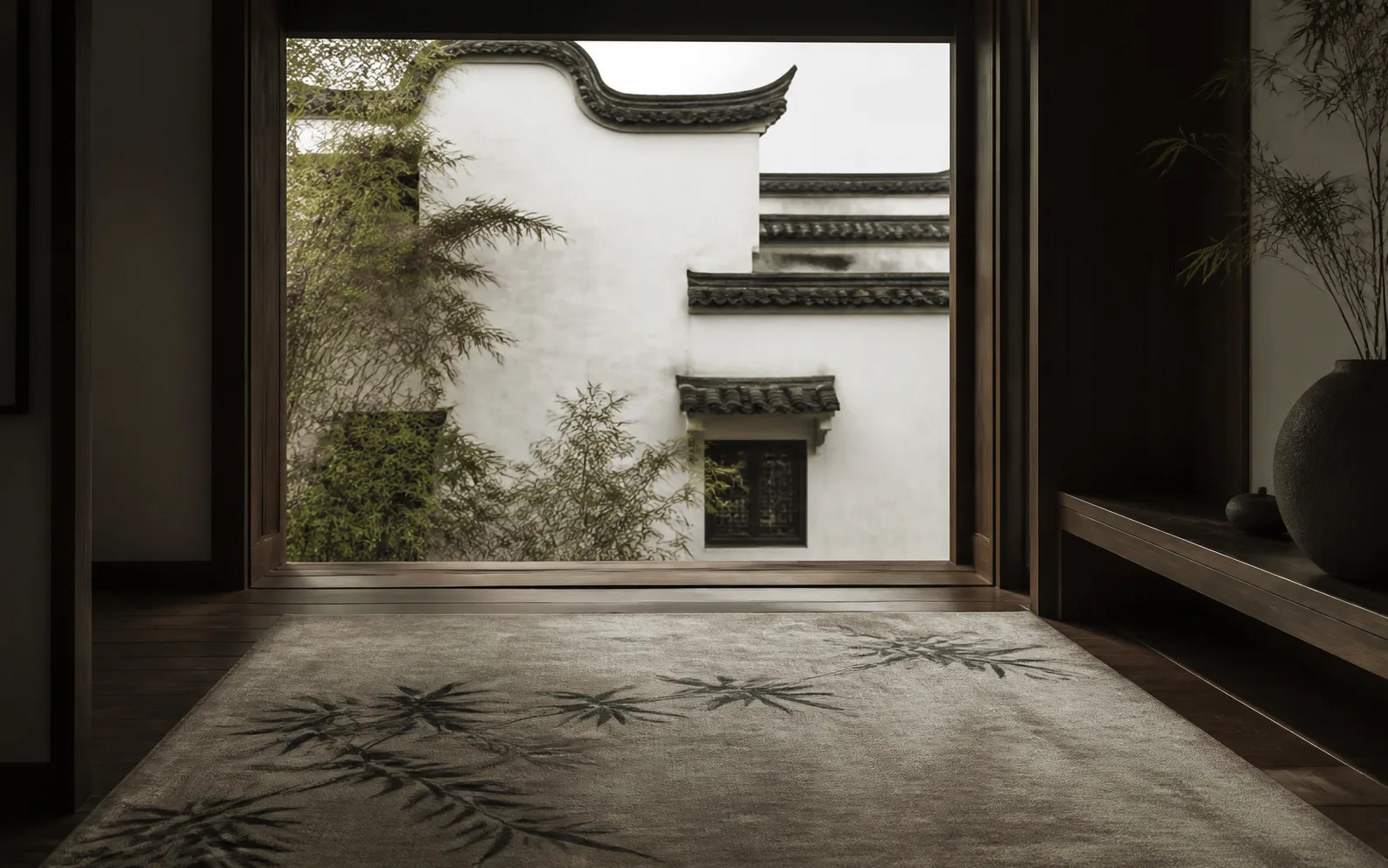
Sitting across from Ming furniture
The rooms are furnished along Ming-dynasty lines, deep timber and clean edges, and the carpet faces them rather than decorating them. The pattern must not outshout the furniture, and the tone must catch timber's weight without leaving the white walls stranded. Bamboo shadow is the through-line: Phase I keeps the ink light to match the building's clarity, Phase II adds weight and the space settles. Same drawing, different amount of water on the brush, the gap closed by matching cards against the interior's own timber.
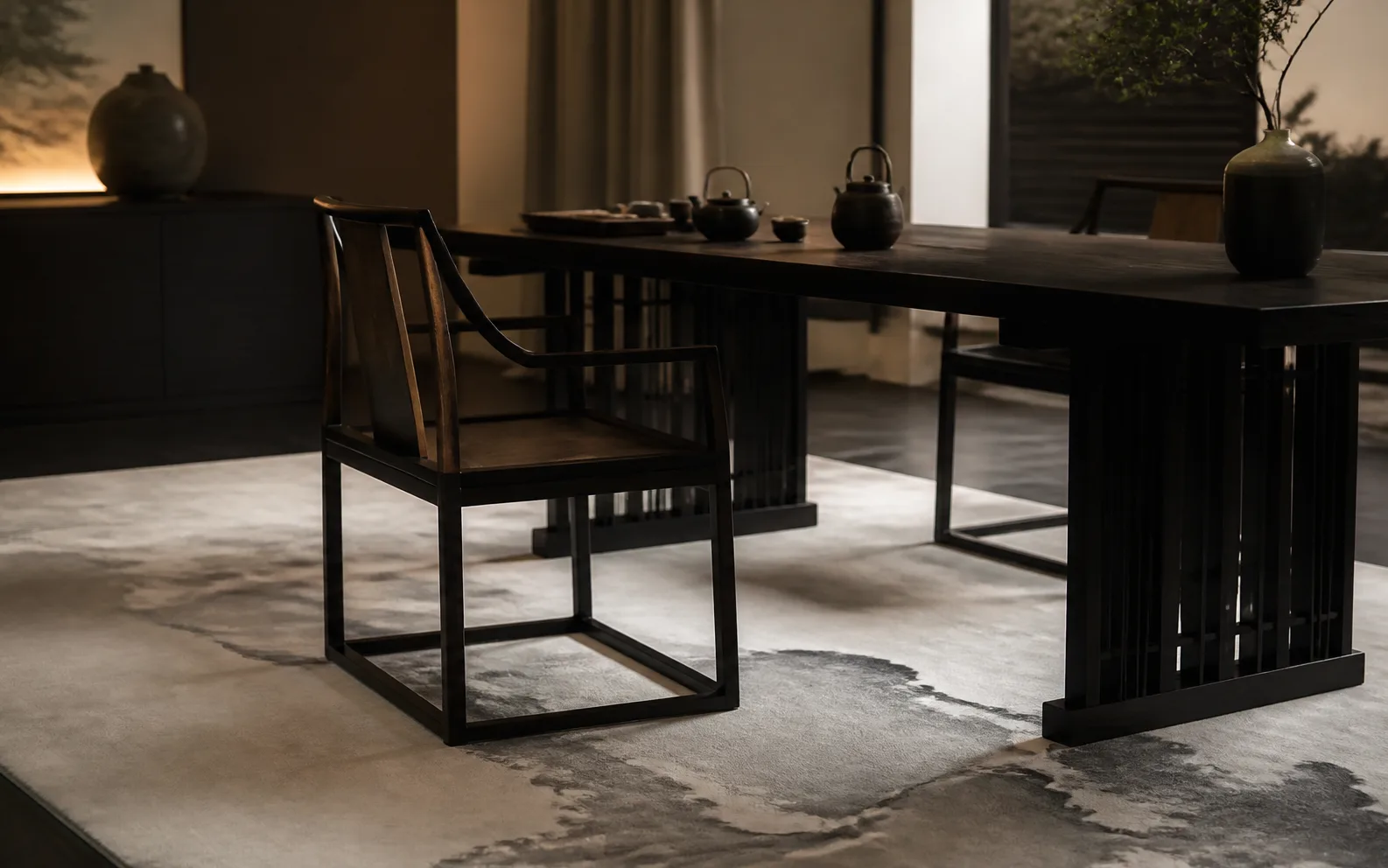
Grinding ink one stitch at a time
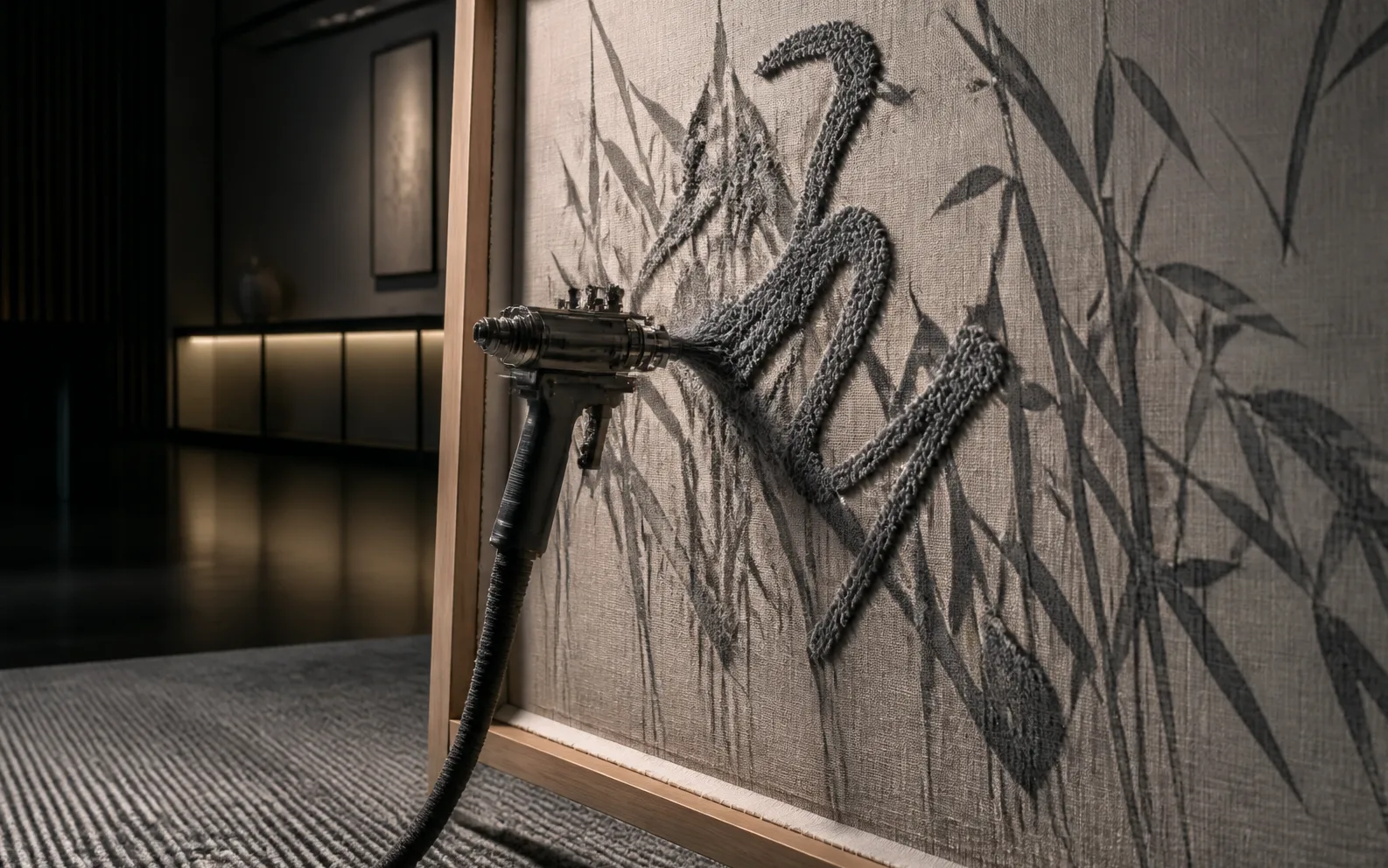
Every pattern is hand-tufted, so the density and tone of each bamboo shadow can be controlled layer by layer. Depth is not dyed on but built stroke by stroke from tuft-density differences, like grinding ink on a horizontal surface, the only dependable way to get the Huizhou spirit onto a floor. Wool leads the fibre mix, pile height and density set for bare feet and for sitting on the floor, with the larger villas on their own setting. Backing and underlay were chosen for a damp mountain floor that stays honest and odour-free once the heating runs.
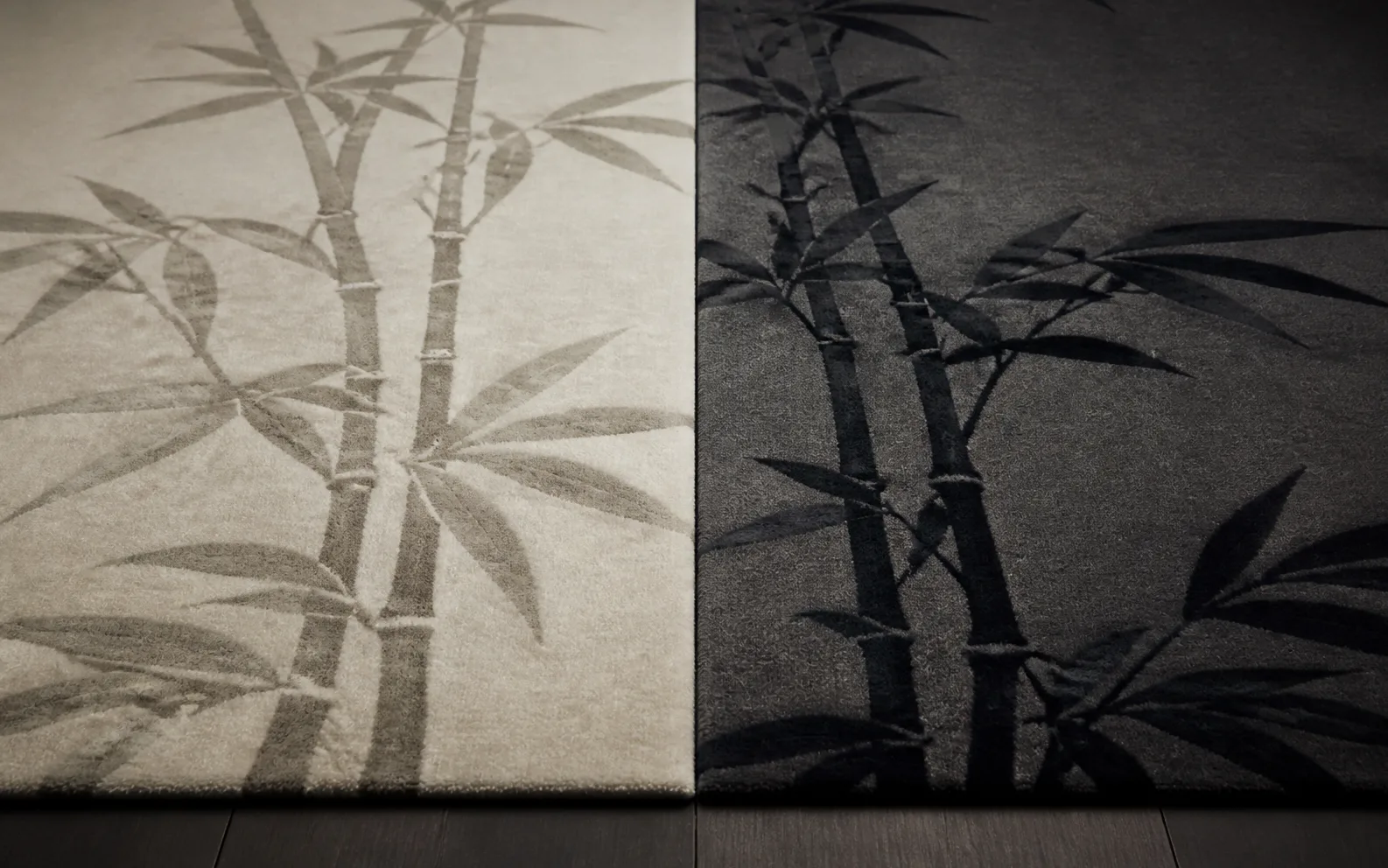
Two phases and a villa, three tempos
Zoning follows the phases and the room type. Phase I suites let white and wood hold most of the field with only a few strokes of ink. Phase II returns to the same subject heavier, and a guest feels the difference in weight without knowing the year. The villas loosen the rhythm and drop the density so the walk slows down with them. The lobby is the shared entrance to all three, tuned to a middle tone that ties the white walls outside to the dark timber inside.
Damp first, echo second
A resort checks different boxes from a city hotel. Flame performance is specified to GB 8624 Class B1, with public areas and escape routes taking priority. Mountain air stays wet and the construction carries a great deal of timber, so backing and underlay were selected for damp resistance and for surviving long alternation between wet and dry. Emissions follow FloorScore and the GB 18587 limits, which matters more where the floor is heated, because a warm floor has nowhere to hide its off-gassing. Guestrooms were designed for mid-frequency reverberation of 0.4–0.6 seconds; the valley is quiet already and the floor was not going to add echo to it.
Sampling that cannot be hurried
Hand-tufted samples are slower and more honest than woven ones. An A4 swatch settles the density of the bamboo shadow, a 1:1 block propped against a real wall shows whether the ink can stand up to the white, and only when both hold do owner, designer and ADA seal the sheet and open the batch. Wool is drawn from a single lot, and since depth comes from tuft density rather than after-tinting, a rejected area is re-tufted instead of corrected. A batch runs on weeks, and the two phases were scheduled apart so the two ink weights never arrive in one delivery.
The two seasons that tell
Laying started at the far end of each suite and moved out. The villas were panelled to the carpet's own widths with seams routed through the pattern's blank spaces, so no bamboo shadow is cut in half. Wet-season cleaning avoids water, relying on dry extraction and stain treatment by material, and that routine went to the hotel at handover. Switching the heating on and off are the two moments that reveal problems, so the aftercare visits sit on that calendar, checking lifted edges and colour drift. Across 2015 and 2019 the three layers, white, wood and ink, still read separately.