 ADA FLOOR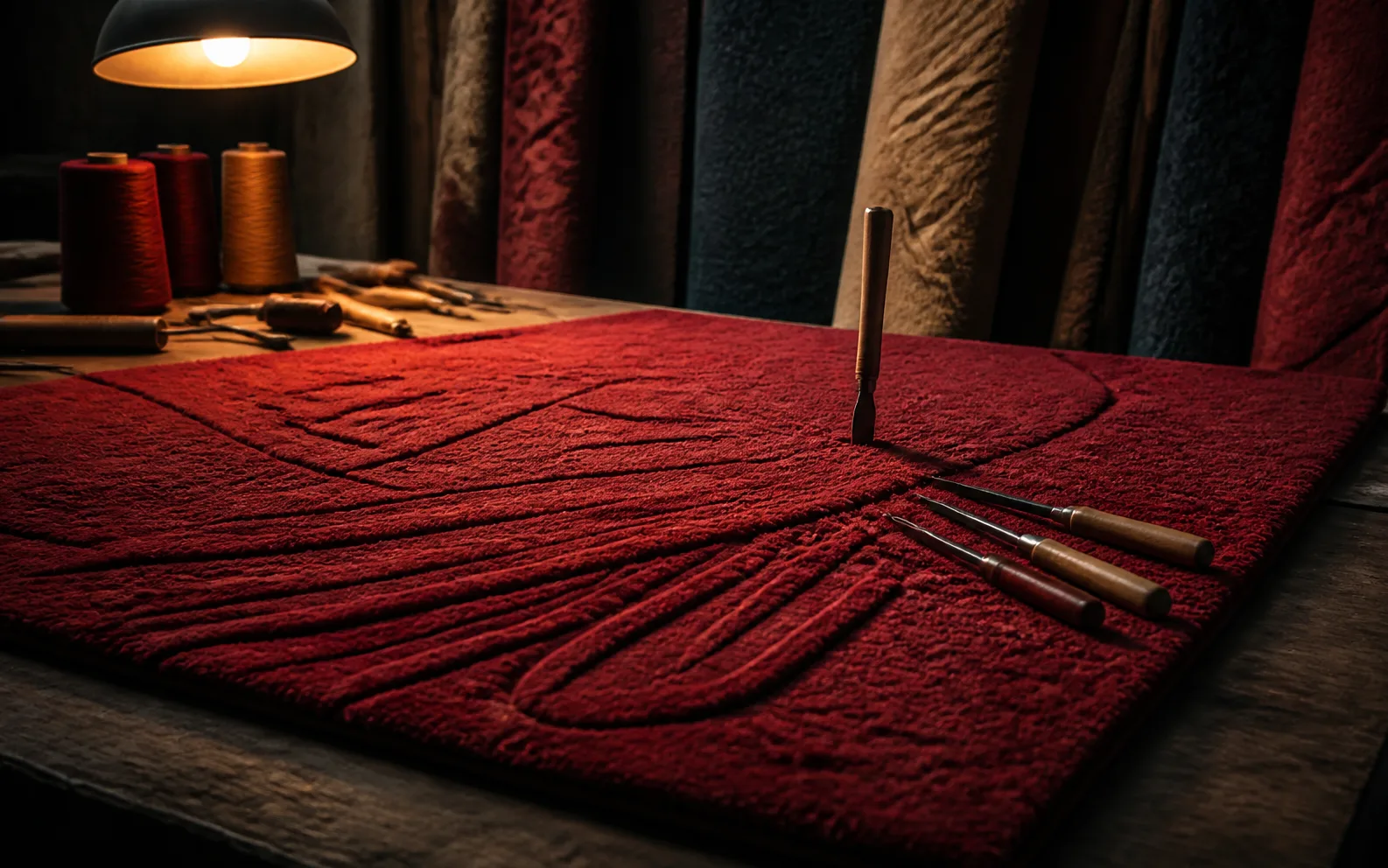
From concept to the drawing a loom can read
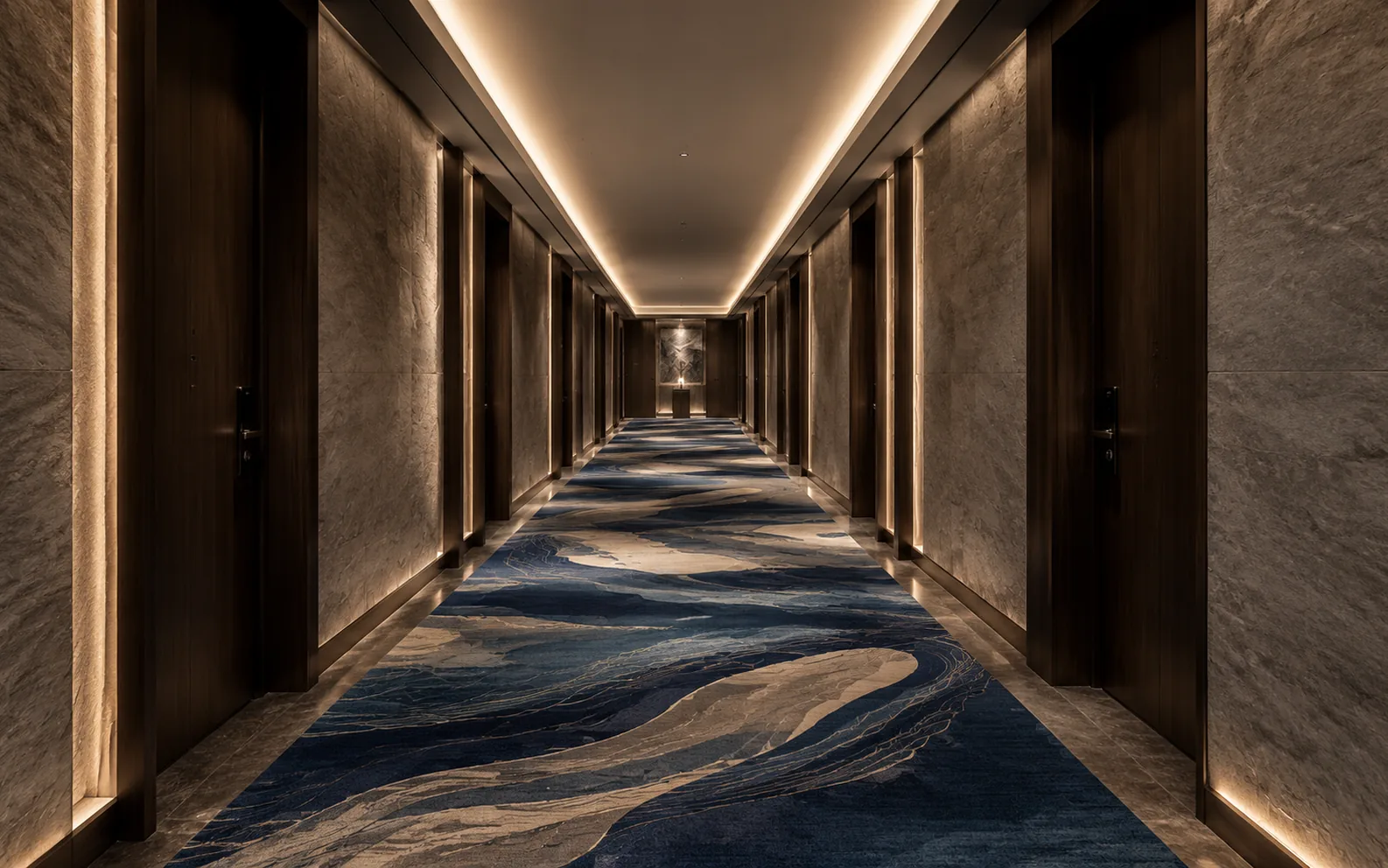
The starting point may be a sculpture, a leaf, a line of poetry or a single colour. Design development translates it into weavable language: lines are checked against the loom's minimum unit to see how sharply they can turn, colour transitions are won inside those technical borders, yarn cards are confirmed in daylight and lamp versions. The road between render and artwork is where bespoke earns its name.
Four constructions, each with its own voice
Hand-tufting carries complex pattern and irregular shape; chip-carving and sculpting carry relief and light, with pile-height differences doing the shading; Axminster carries large-area consistency and delivery certainty with programme changes across twelve-plus colours; hand-knotting, sisal and jute carry natural fibre and collector-grade work. One scheme may use all four, each on its own ground.
Bespoke earns its name on the road between a blank page and the loom.
How far the materials can go
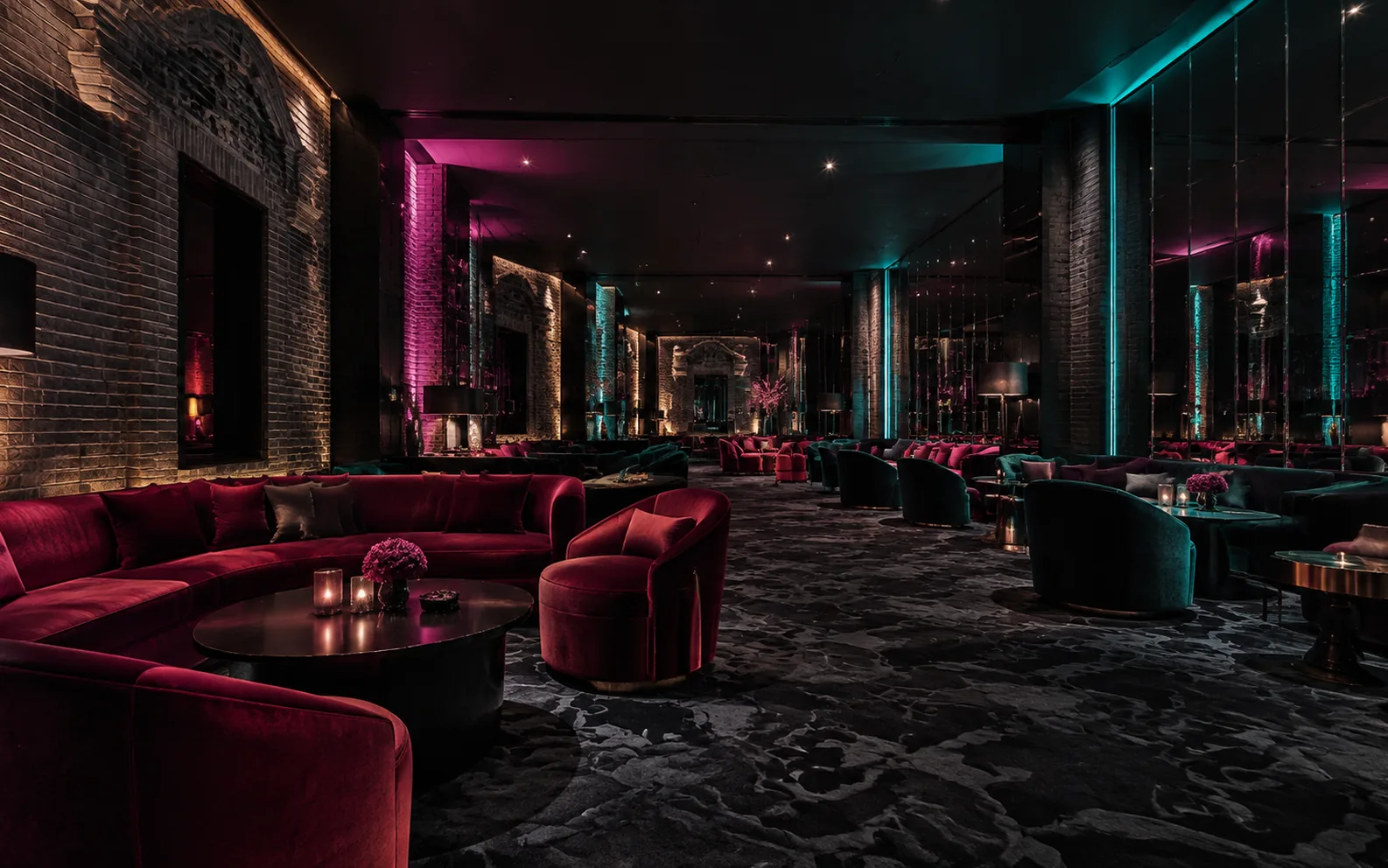
Wool, silk, blends, sisal and jute combine by brief; pile height, density, carving depth and silk ratio are all variables — two fibres of different lustre can be woven into one field, so the carpet reads one way by day and another under lamps. Materials are engineered backward from the space's duty and the budget, not forward from the warehouse.
Even one piece runs on engineering standards
A single bedside rug still walks the full protocol: sealed sample, one-lot dyeing, in-line checks, out-of-factory inspection. Fire, antistatic and emission targets can be specified per project (ASTM E648, CRI HT-101, FloorScore), and every delivery carries its batch archive, so future pieces match instead of drifting.