 ADA FLOOR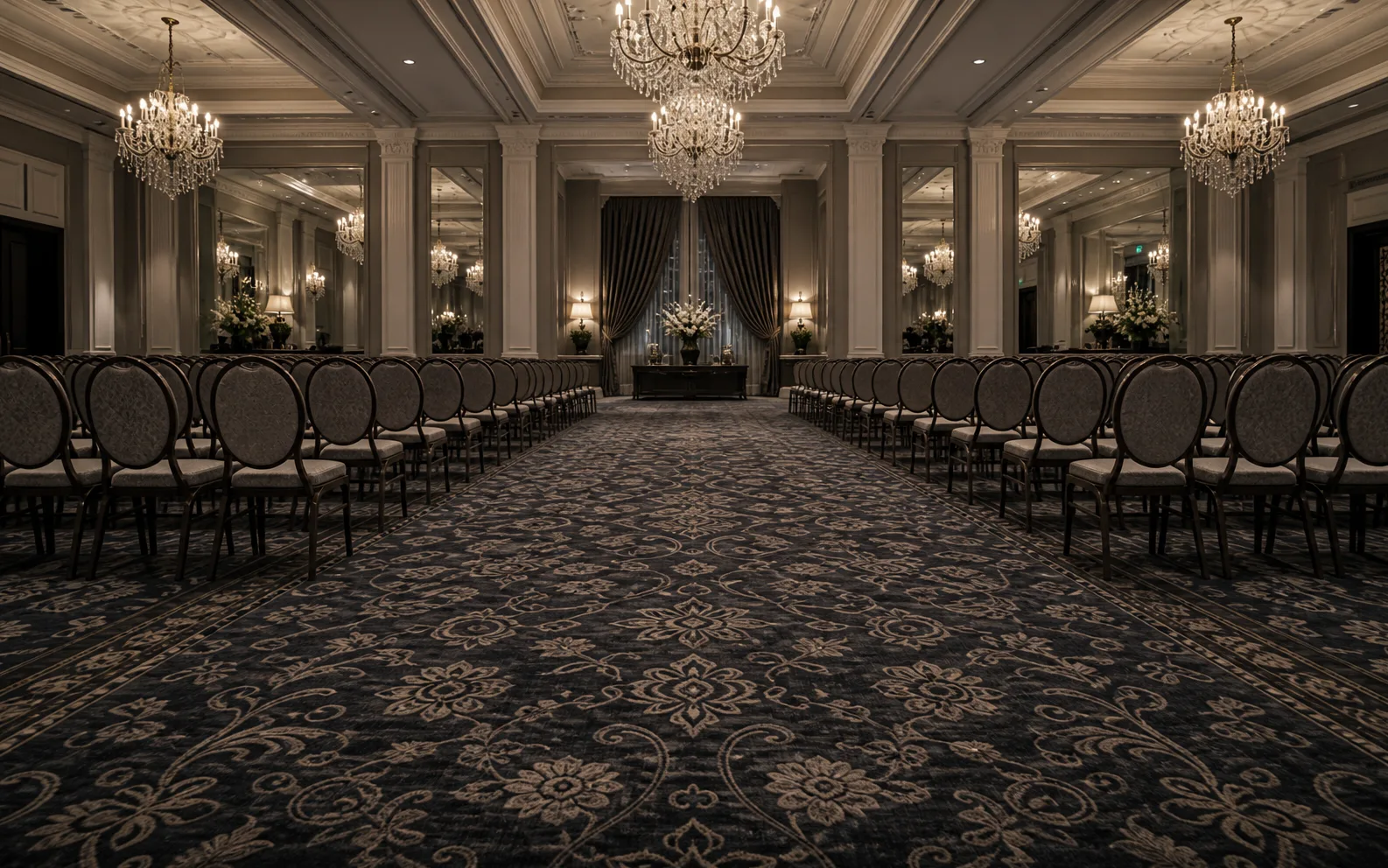
The arrival floor hands in three papers
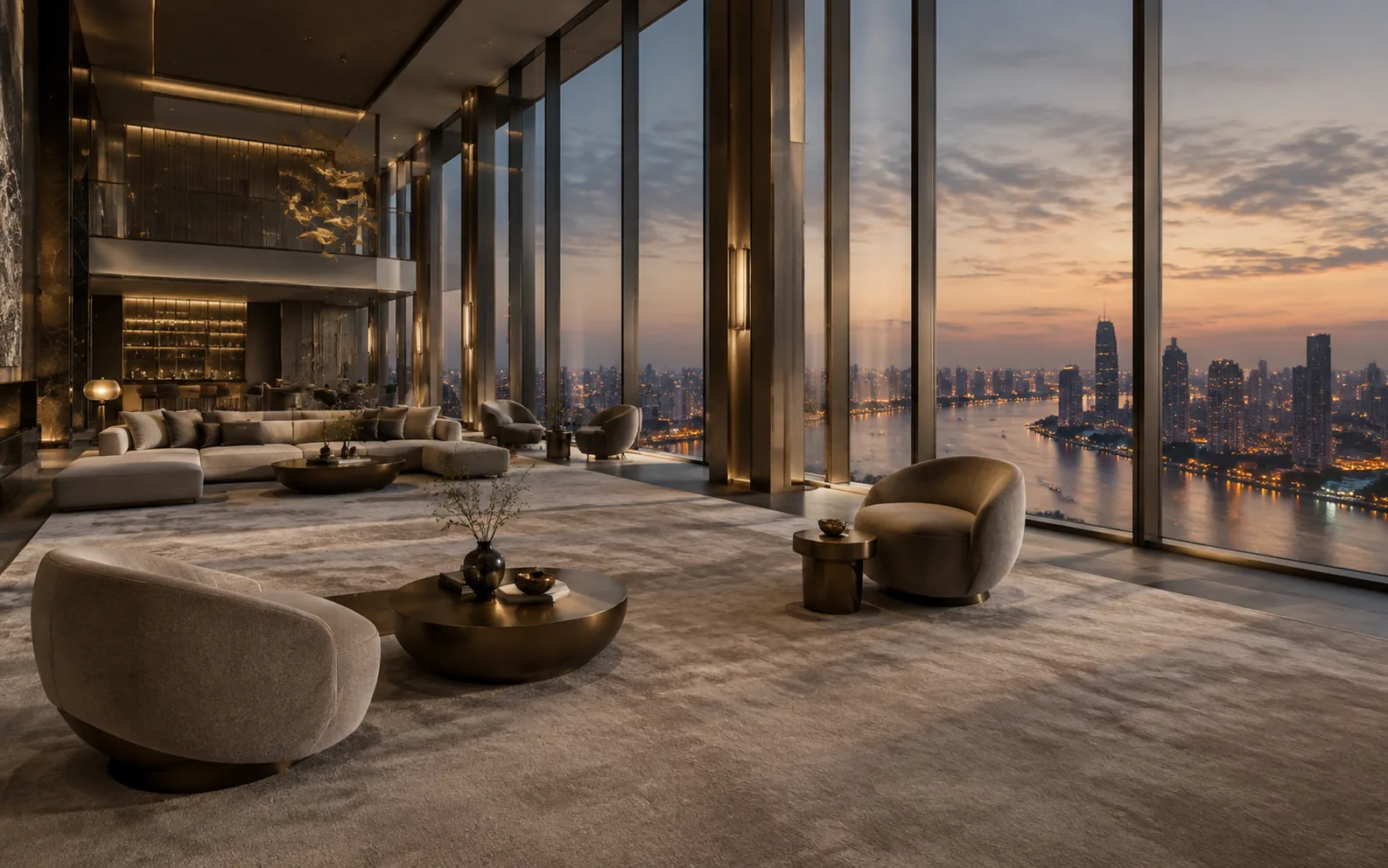
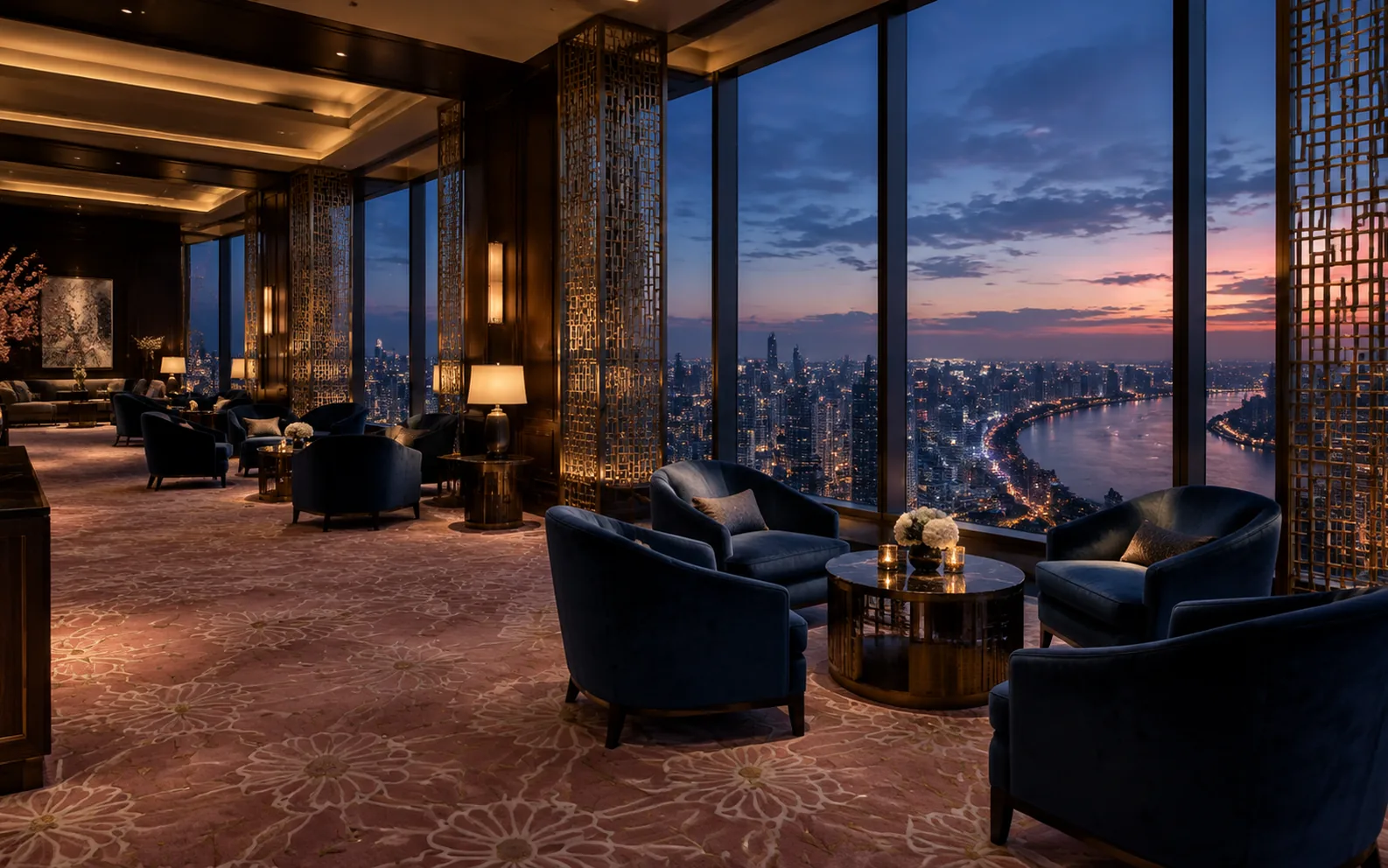
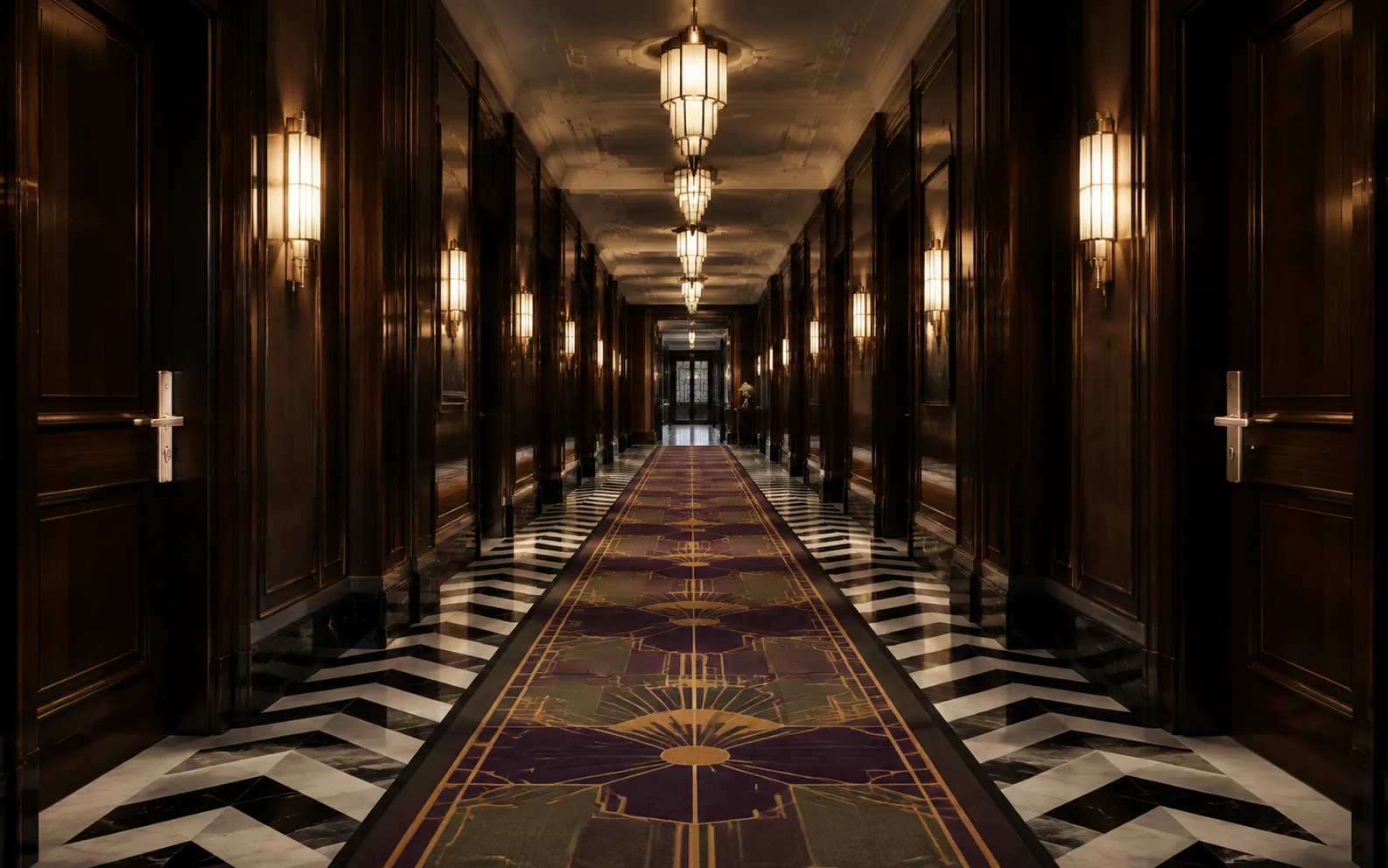
From curb to check-in the floor speaks for the hotel in about ten seconds, and it has to say three things at once. Acoustically, guestrooms are voiced to a 0.4–0.6 second mid-frequency reverberation target, with the carpet-plus-underlay system improving impact sound by a typical 24–33 dB assessed to ISO 10140 and ASTM E492. Safely, corridors are specified to ASTM E648 Class I (critical radiant flux at or above 0.45 W/cm²) alongside GB 8624 Class B1. Visually, the pattern has to travel from lobby to guestroom door without breaking its own language.
Specified zone by zone, never one carpet for all
Guestrooms and corridors run on 4-metre Axminster broadloom — fewer seams, less colour-shift risk; irregular and suite areas switch to hand-tufting made to the drawing. Fibres follow duty: wool or high-wool blends for the rooms' texture and recovery, high-density nylon for corridors and pre-function wear. Pile weight is set in the 1,300–1,800 g/m² band by traffic, static is held within 2 kV to CRI HT-101, and emissions follow FloorScore and GB 18587 limits.
The first ten seconds of judging a hotel are spent standing on its floor.
One line from drawing to opening day
Concept drawings and area schedules are translated into 1:1 weavable artwork and yarn colour cards; A4 samples graduate to 1:1 area mock-ups and nothing enters bulk production before the three-party seal. Axminster lead times run from two to three months on quarterly scheduling, hand-tufted pieces from weeks; the whole programme is built backwards from the opening date. Slabs are surveyed before laying, seams parked in low-traffic lines, pattern matching judged invisible to the naked eye.
When renovation comes, the file is still there
Dye lots, colour cards, panel plans and laying drawings are archived per project, so a renovation a decade later can continue against the original file. Four Seasons Guangzhou did exactly that in 2024: colour adjusted along the original design language, material framework untouched. A system supplier's value tends to show in the second collaboration.