 ADA FLOOR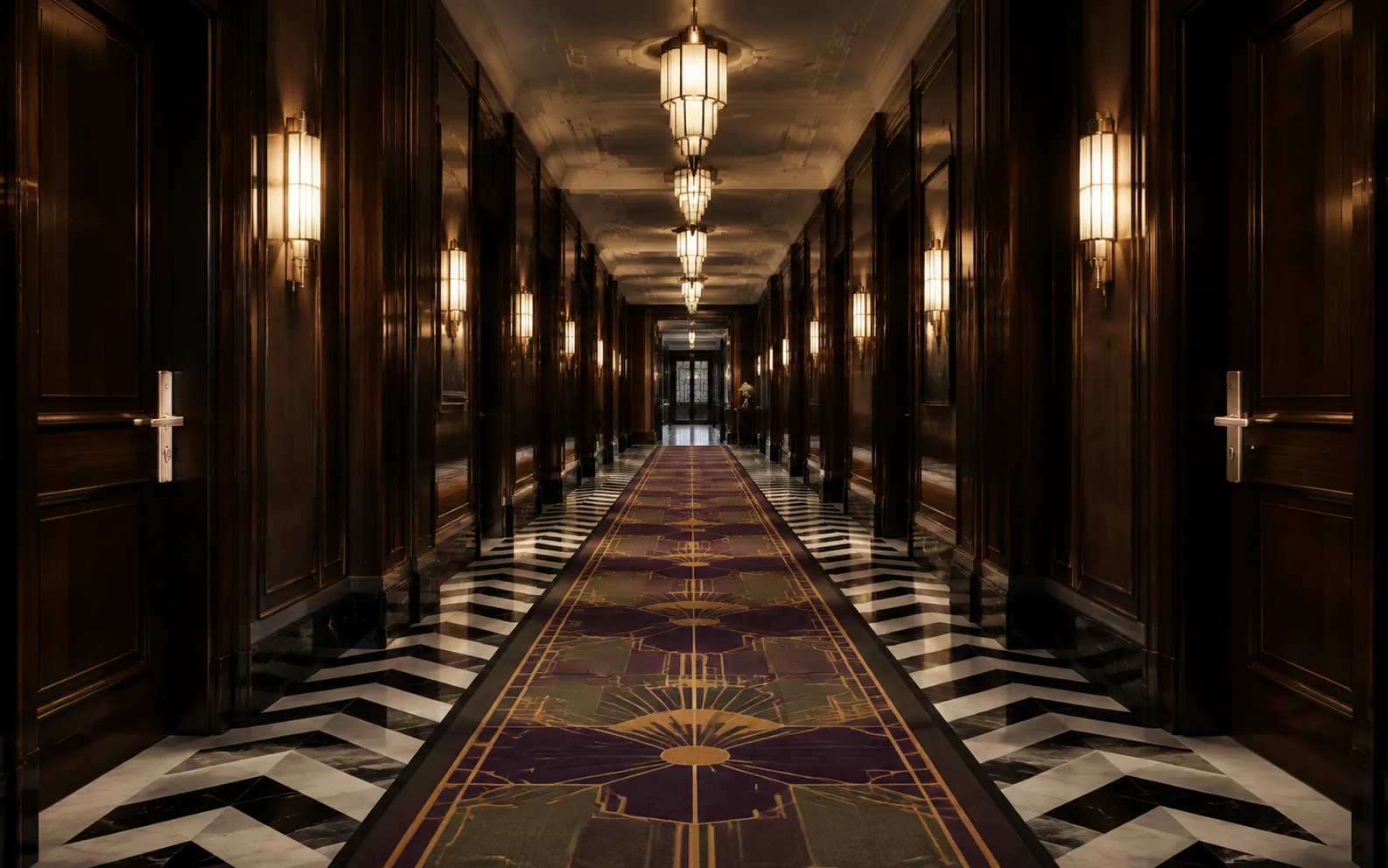
The hard part of the Peace Hotel commission was never the weaving. It was standing behind 1930. During the 2007–2010 restoration ADA FLOOR wove 984.4 m² of carpet for the building on a 4-metre Axminster loom: 7 mm pile, 80% fine wool, jute backing, 12 programme-changed colours, the patterns re-inked from the hotel's own archive.
A seniority older than the client
The Palmer & Turner tower has kept its post on the Bund since 1929, nearly a century before its current owner arrived. Under HBA's 2007–2010 restoration the carpet sat among the core questions: inherit the French Art Deco pattern language of the 1930s, and satisfy contemporary five-star fire, wear and acoustic standards at the same time. There is no negotiating with either half of that sentence, and nothing was negotiated.
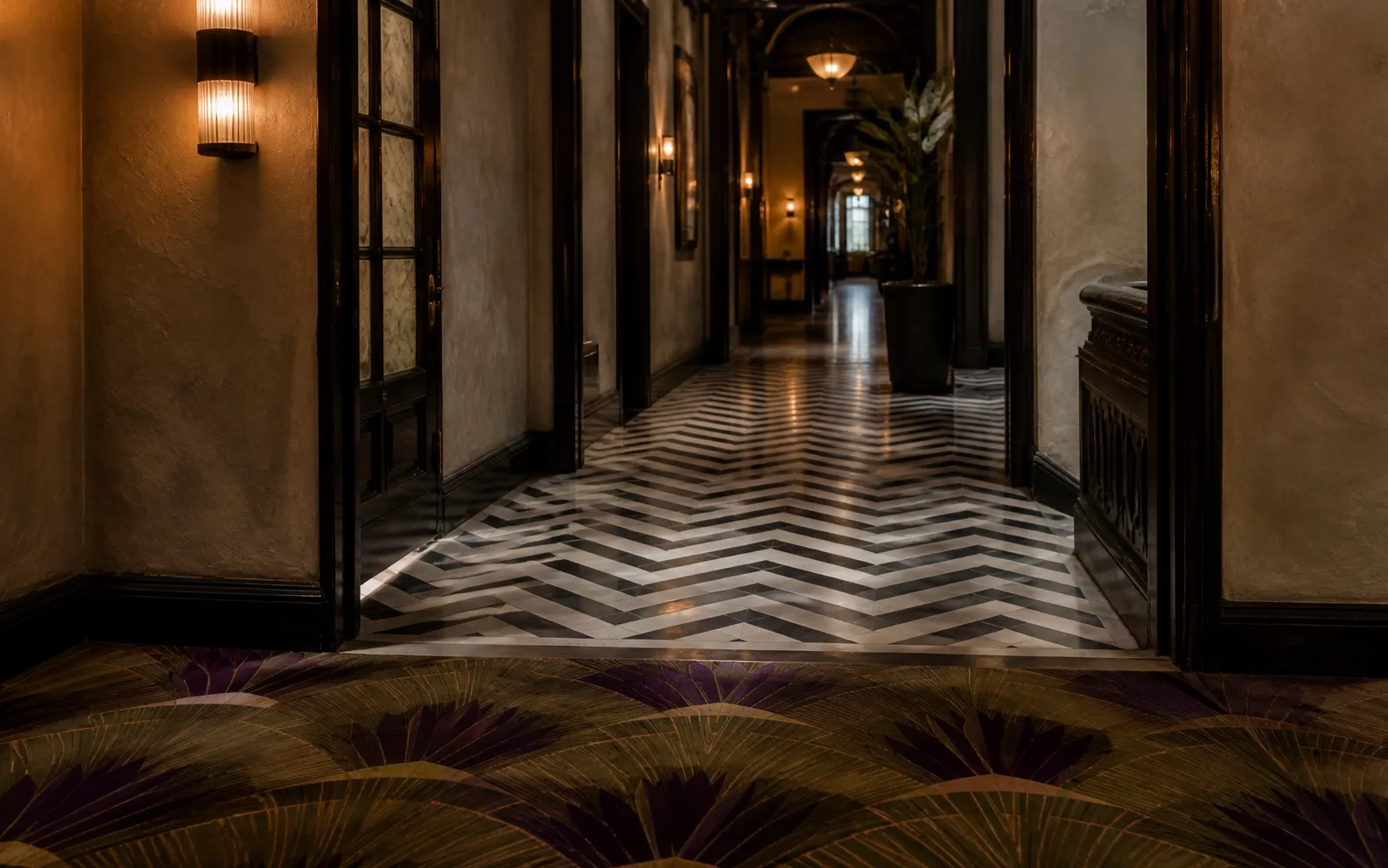
Purple, olive and ochre, lifted page by page
The palette is not the designer's invention. Purple, olive and ochre were extracted page by page from the hotel's own archives, and those drawings then faced a second test. More than one round of grinding passed between archive sheet and physical sample, each round holding the original's colour against the woven one until the two recognised each other in Bund light. The matte return of wool on a jute backing was settled in those same rounds.
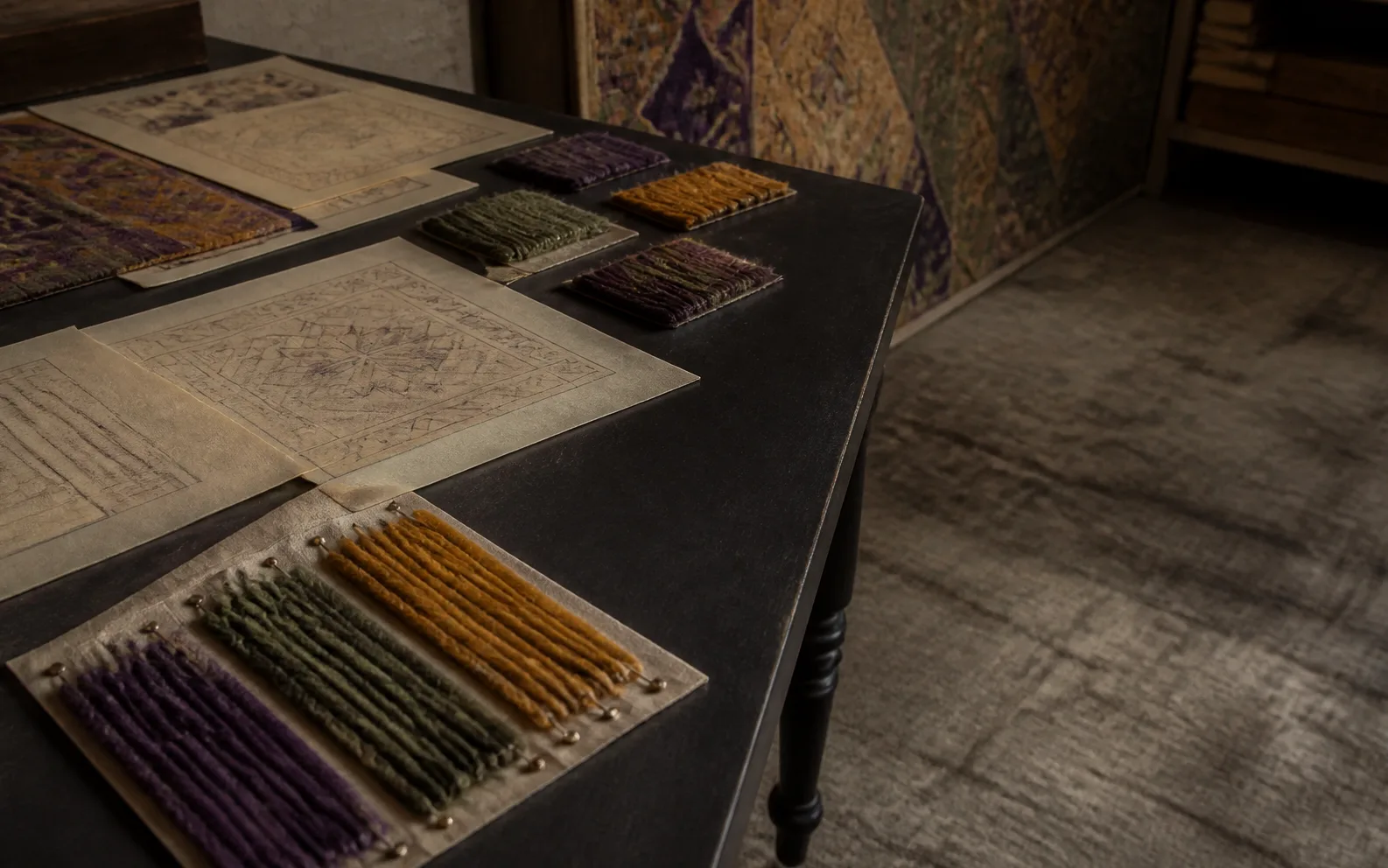
The grammar of a 4-metre loom
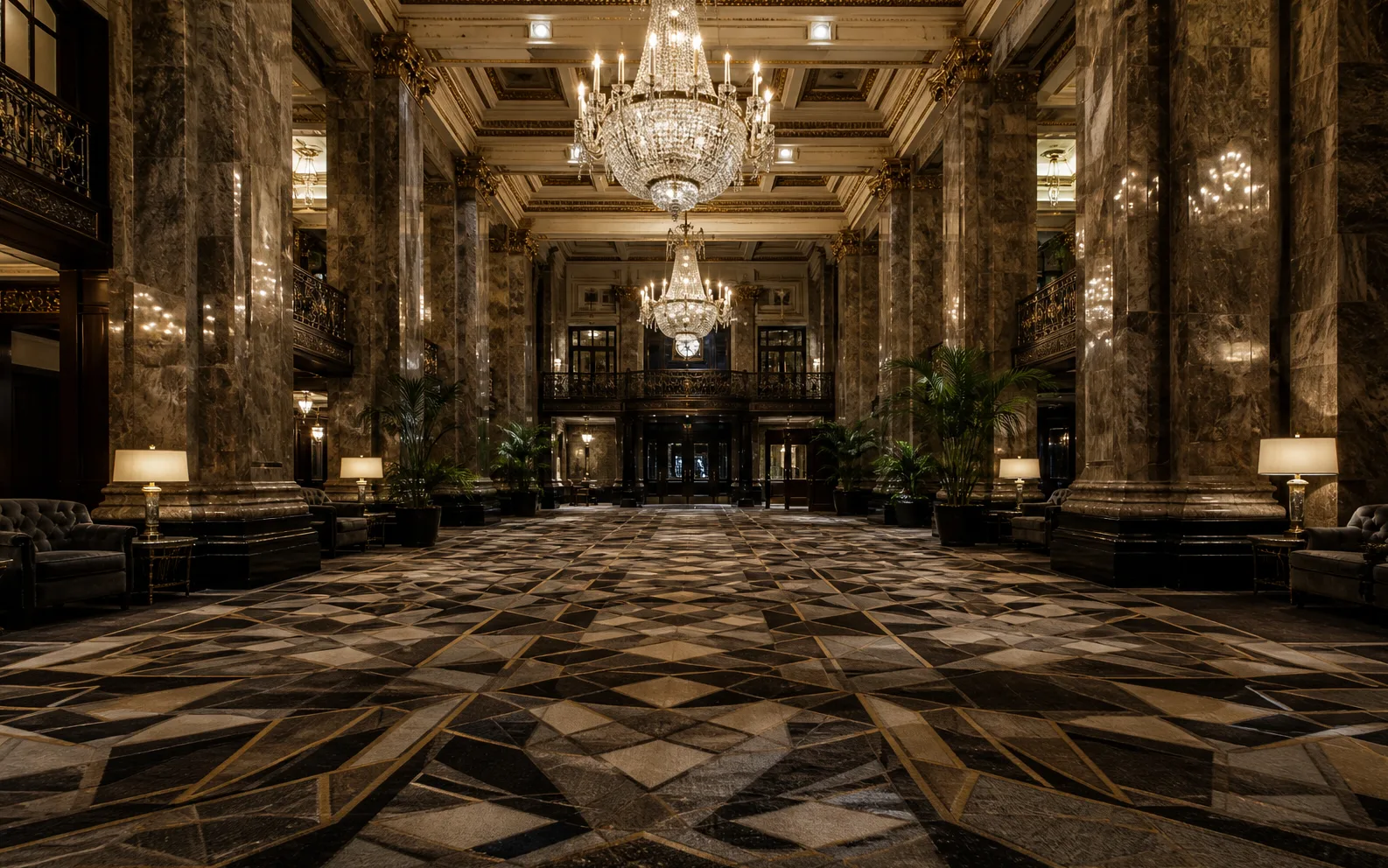
The pattern landed on a 4-metre Axminster loom: twelve colours changed under program, 80% premium wool, jute backing, 7 mm pile. The loom's minimum unit dictated how sharply a line could turn, and colour transitions had to be won inside those technical borders. Pile weight sits in the 1,300–1,800 g/m² band, biased toward wear and recovery. The machine votes before the eye does. Set against the black-and-white marble corridors, the carpet reads as both continuation and concession.
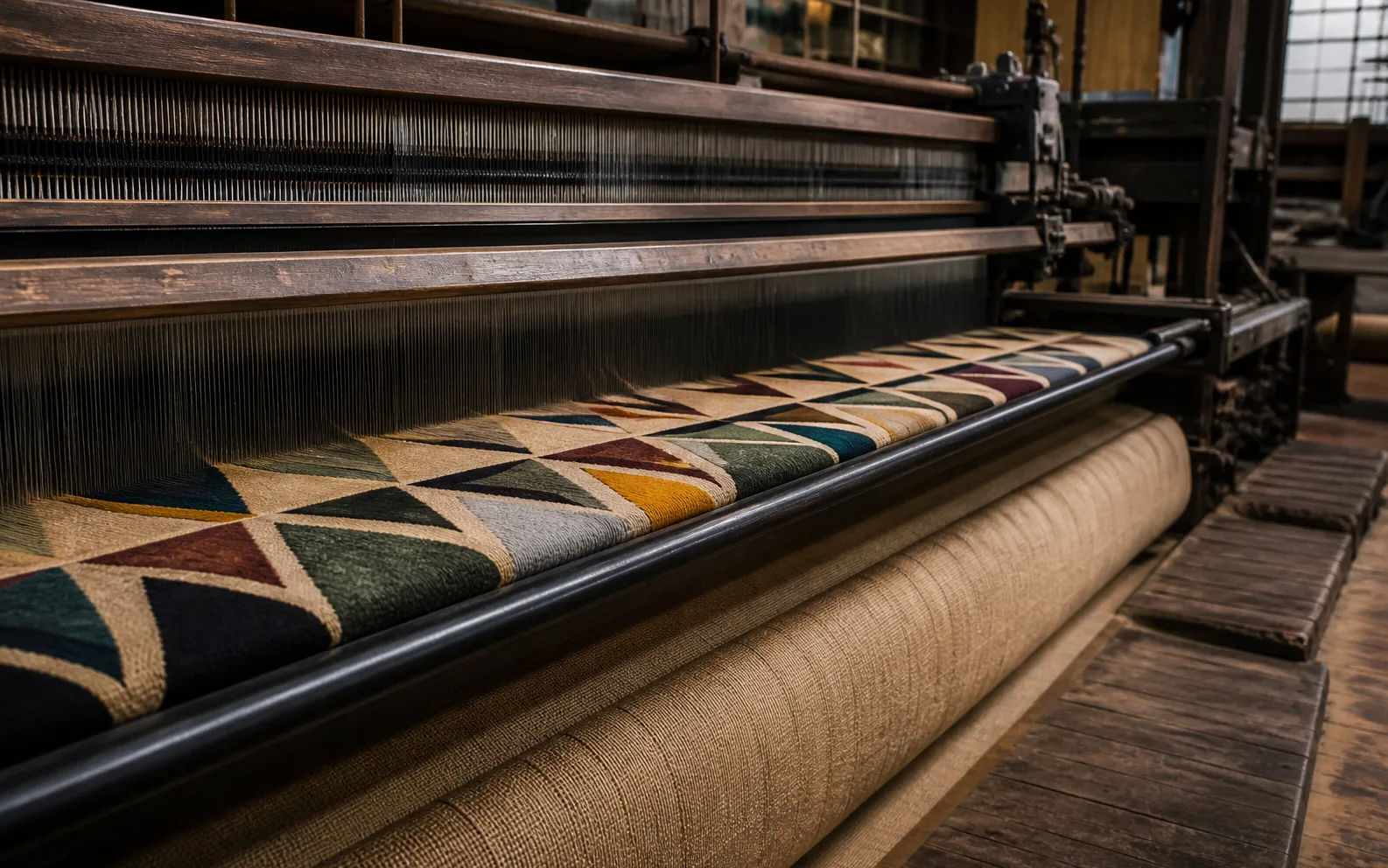
Cutting 984.4 square metres into panels
984.4 square metres is not one piece of cloth: the 4-metre weaving width set the panel plan, the panel plan followed the corridor geometry, and every seam had to match the pattern across all twelve colours. Heritage walls are never straight and corners never square, so each deviation between site and drawing was absorbed, quietly, by the cutting bench at fitting. A straight run, a turn and a room threshold take different panel sizes, and one line on the drawing reorganises itself at every new width.
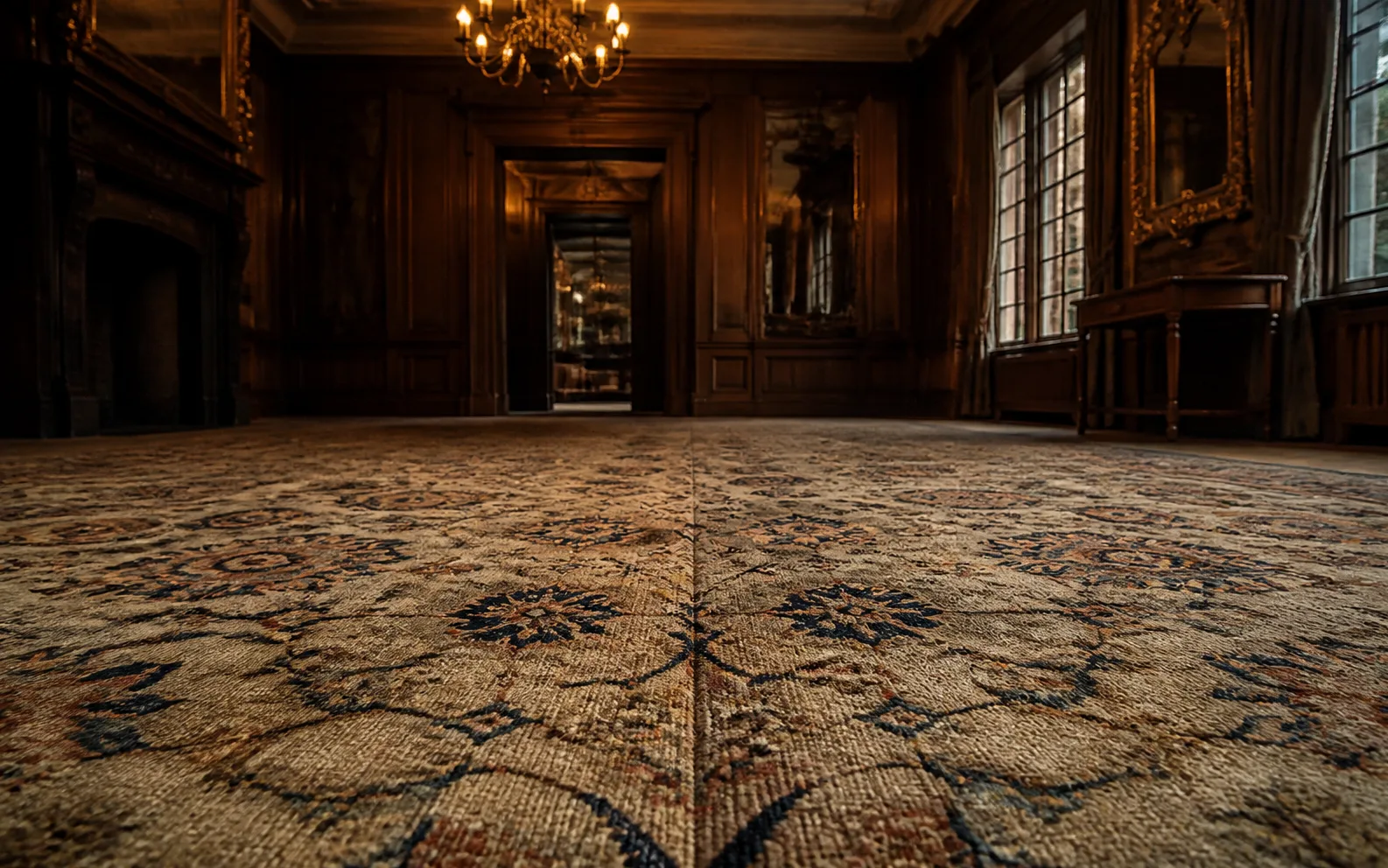
Quiet against marble, fire inside a monument
Hard stone is this building's native ground and footsteps travel along it. The carpet-plus-underlay system is assessed to ISO 10140 and ASTM E492 for impact-sound improvement, commonly 24–33 dB; within the 984.4 square metres, guestroom floors and public floors were evaluated separately, with the long galleries held to a mid-frequency reverberation target of 0.4–0.6 seconds. Fire came first in a heritage structure: GB 8624 Class B1 across the build, and the marble corridors' broad fields specified to ASTM E648 Class I at critical radiant flux of at least 0.45 W/cm². Windows open little in an old building, so emissions were closed out against FloorScore and GB 18587.
Three signatures before the loom starts
Archive drawings went to A4 first for colour, then to a 1:1 mock-up laid back in place against the marble for a full cycle, sealed by owner, designer and the restoration team before any field opened. The twelve-colour change program ran once on the loom to confirm sequence, with yarn locked to a single dye lot and pre-blended across lots. Production was scheduled by quarter and delivered in batches, every roll checked for head direction so the two ends of a long corridor would not meet out of register.
Not upstaging the 1930s
In a heritage building, scale is a position. The restored floors do not upstage the 1930s; they simply let the twenty-first century walk in without apologising. What came with them was routine: vacuum routes, stain treatment by material, neutral cleaners only, because wool on a jute backing does not survive alkali. Each later visit matches the replenishment lot back to the sealed sample, and the twelve-colour registration lines remain on file.