 ADA FLOOR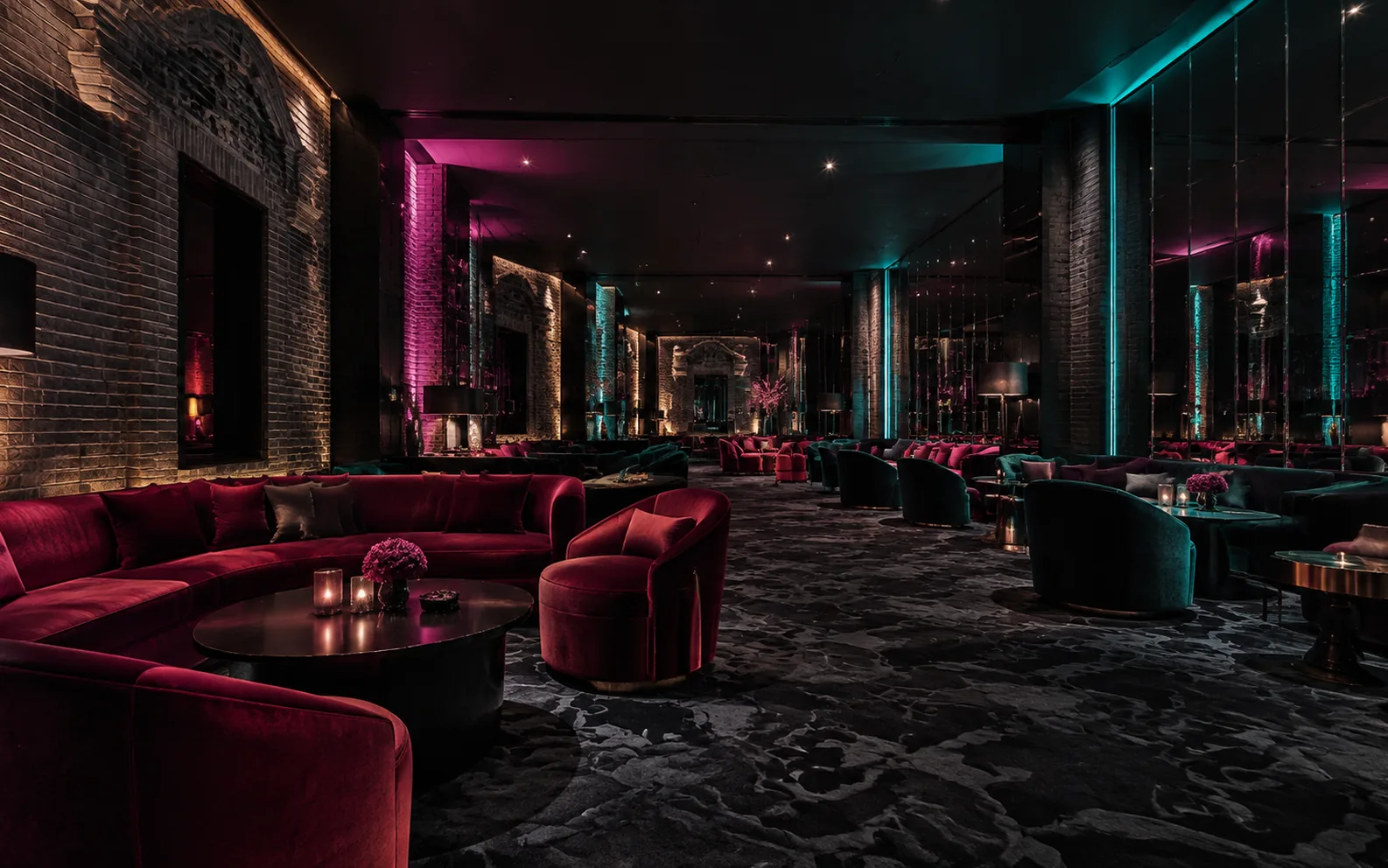
Carpet for a W asks a different question: how to hold a room down without damping it. ADA FLOOR developed, sampled and produced the carpets for the 374 guestrooms, corridors and public areas handed over with the 2017 opening, rooms and corridors woven on a 4-metre Axminster broadloom and the interlocking public patterns and irregular edges hand-tufted sheet by sheet, with intensity graded zone by zone along one route. Since the opening the grey ground has taken no colour bleed and the geometry still ends where it was drawn.
A floor that refuses to join in
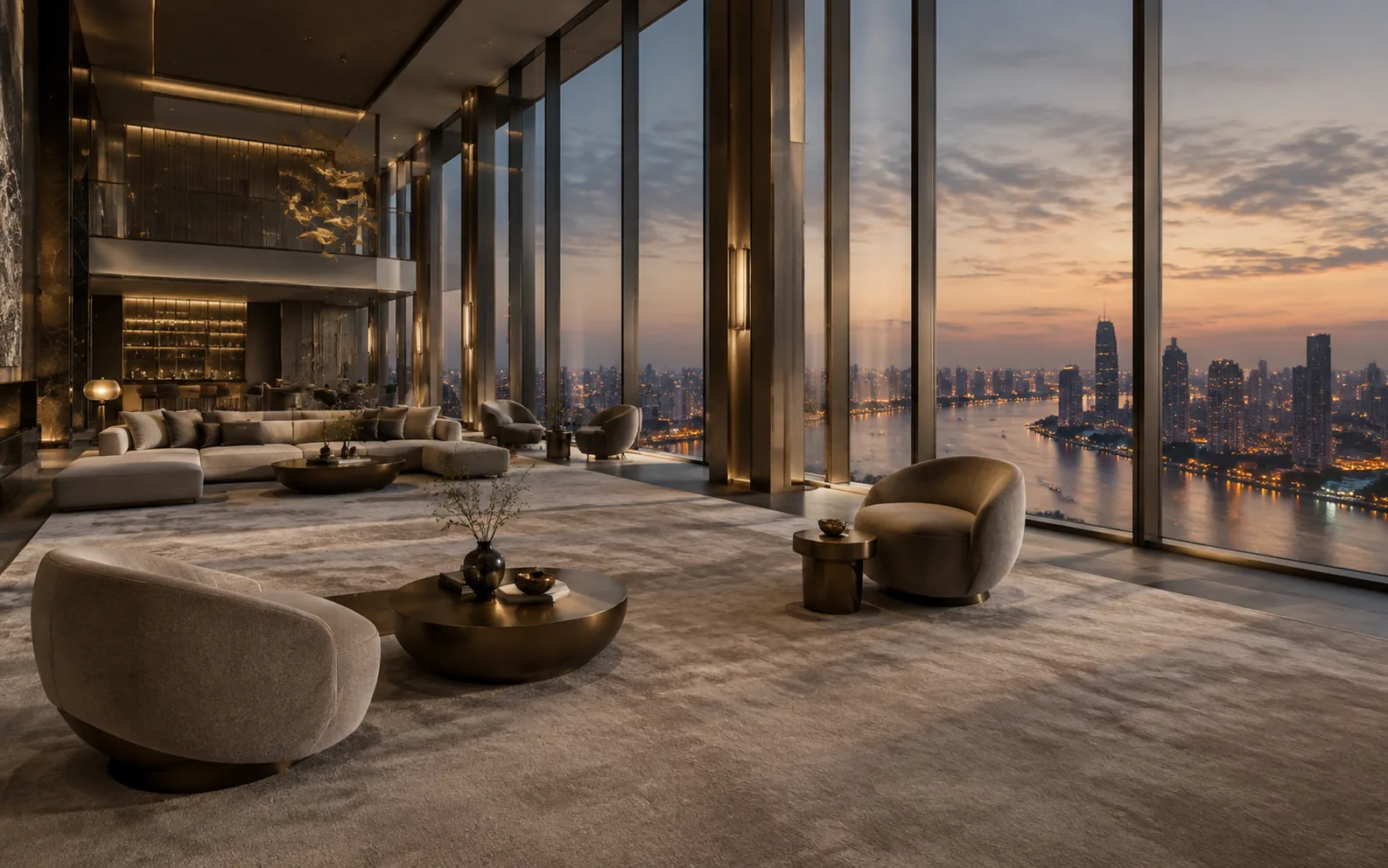
W Shanghai The Bund opened in 2017 at North Bund, between the Huangpu and Suzhou Creek, with 374 guestrooms and interiors by G.A. Design. Brand space runs on saturated colour and mirror, and one more shout at floor level tips the room over. What the owner asked for was not a striking carpet but the one layer that keeps from glowing while everything else does. Noise to the walls and lamps, weight to the ground.
Taking the symbols apart first
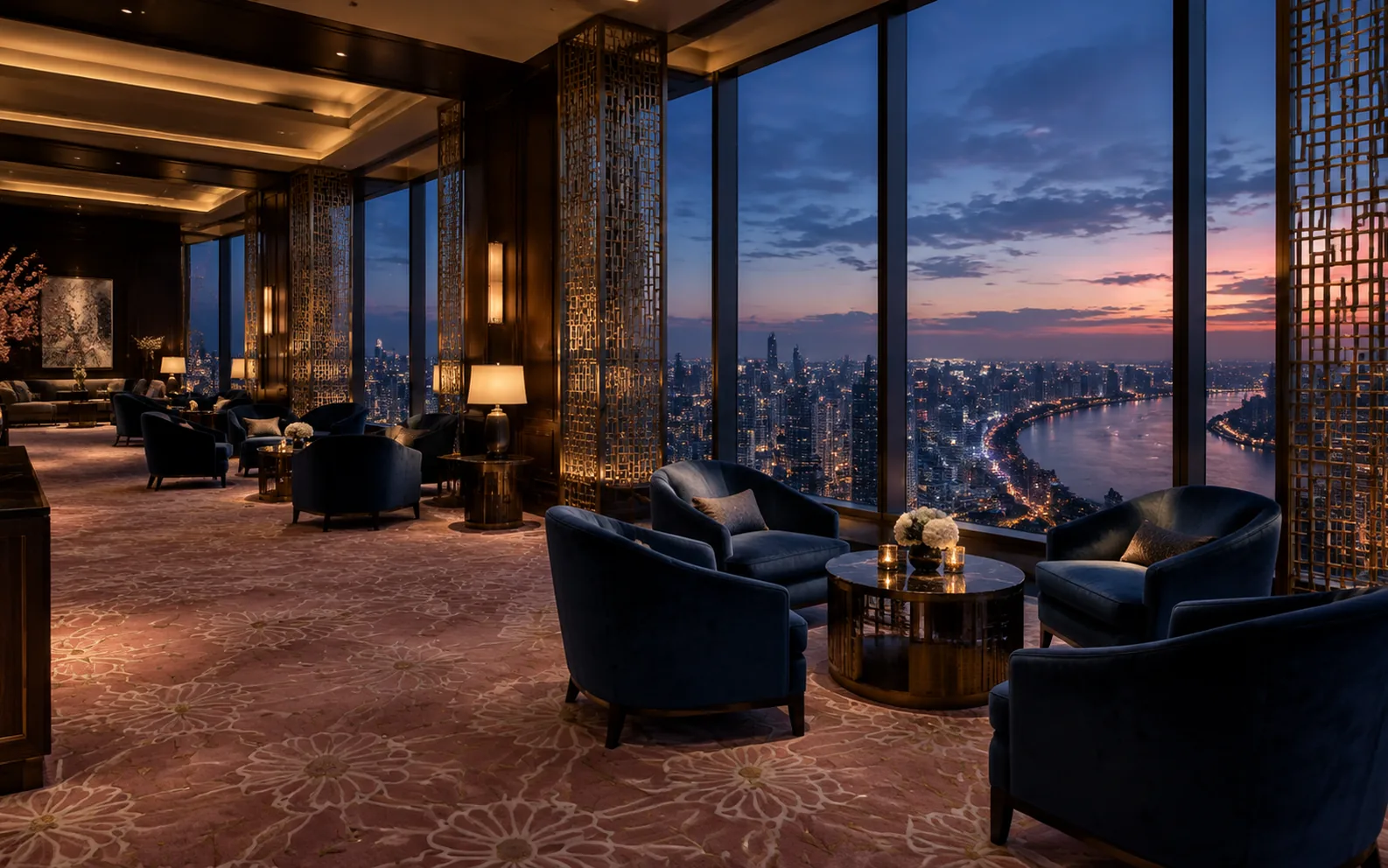
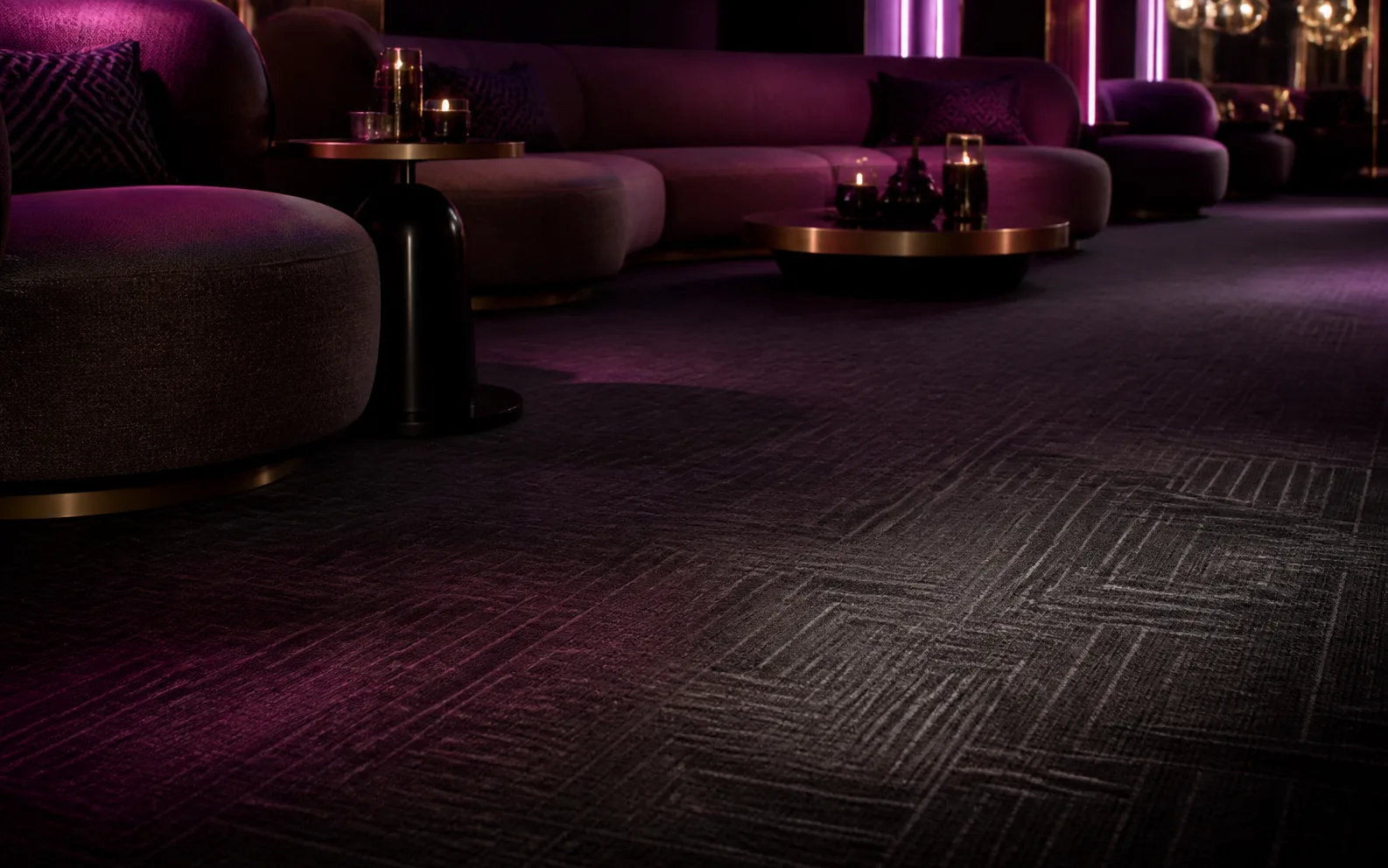
The custom public-area patterns are asked to carry Haipai culture underfoot, and none of its symbols may be printed literally, not the shikumen lanes, qipao, jazz or old cinema, because a printed W turns into a theme hotel. Drawings went through several rounds with the interior team, each element dissolved into interlocking geometry and then tuned against the interior's own colour standard. You almost recognise it, for a second, before it merges into W's language. That second was paid for in revisions.
Grey wool, two constructions
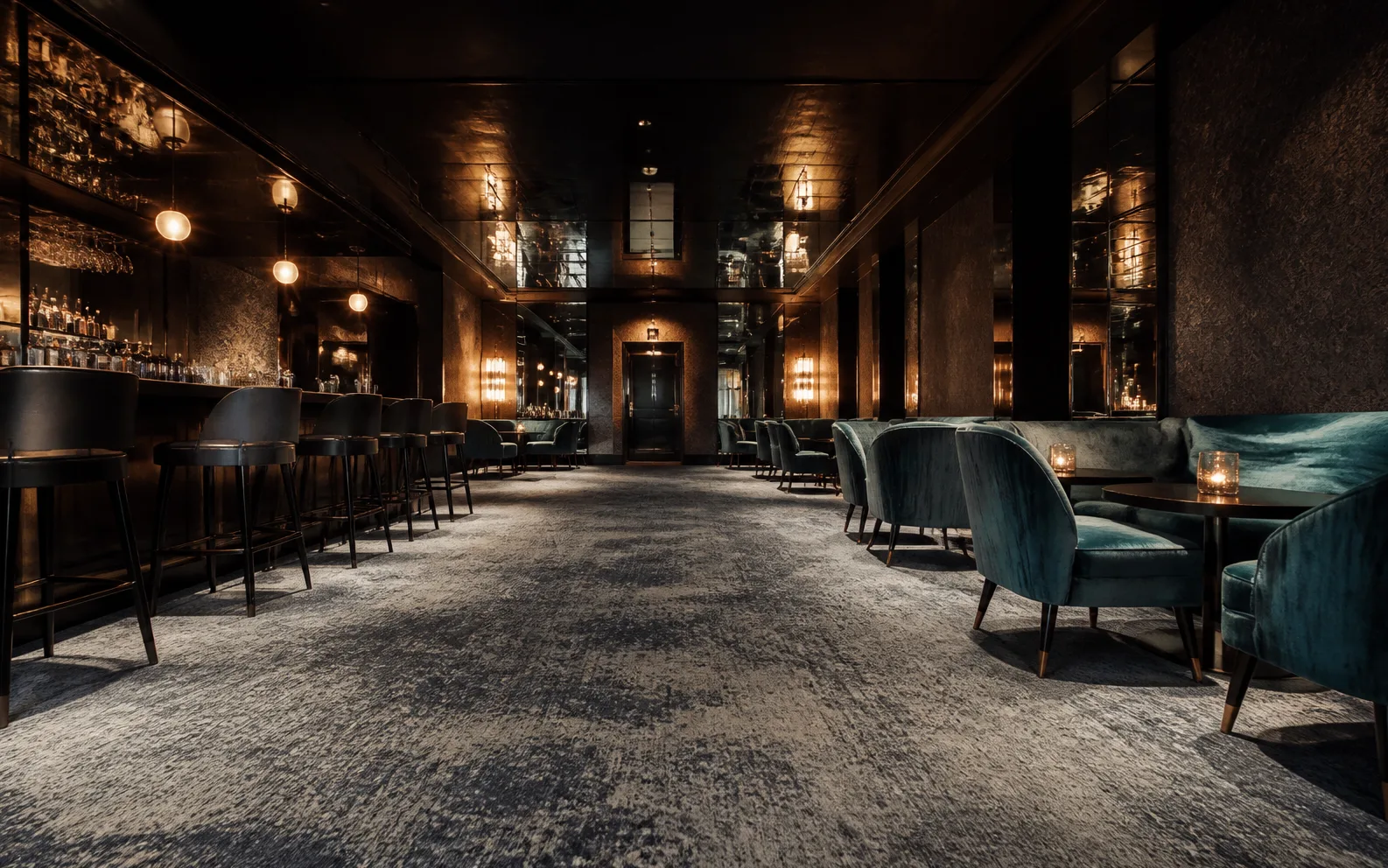
Guestrooms take dark grey wool in a fine texture and a low posture, pile weight specified inside the 1,300–1,800 g/m² band and set per project for bare feet and luggage carts at once. Rooms and corridors come off a 4-metre Axminster broadloom, where programmed colour changes hold density steady across a whole floor. The interlocking public patterns and irregular edges switch to hand-tufting, sheet by sheet, colour built from yarn rather than printed on.
Four settings of intensity
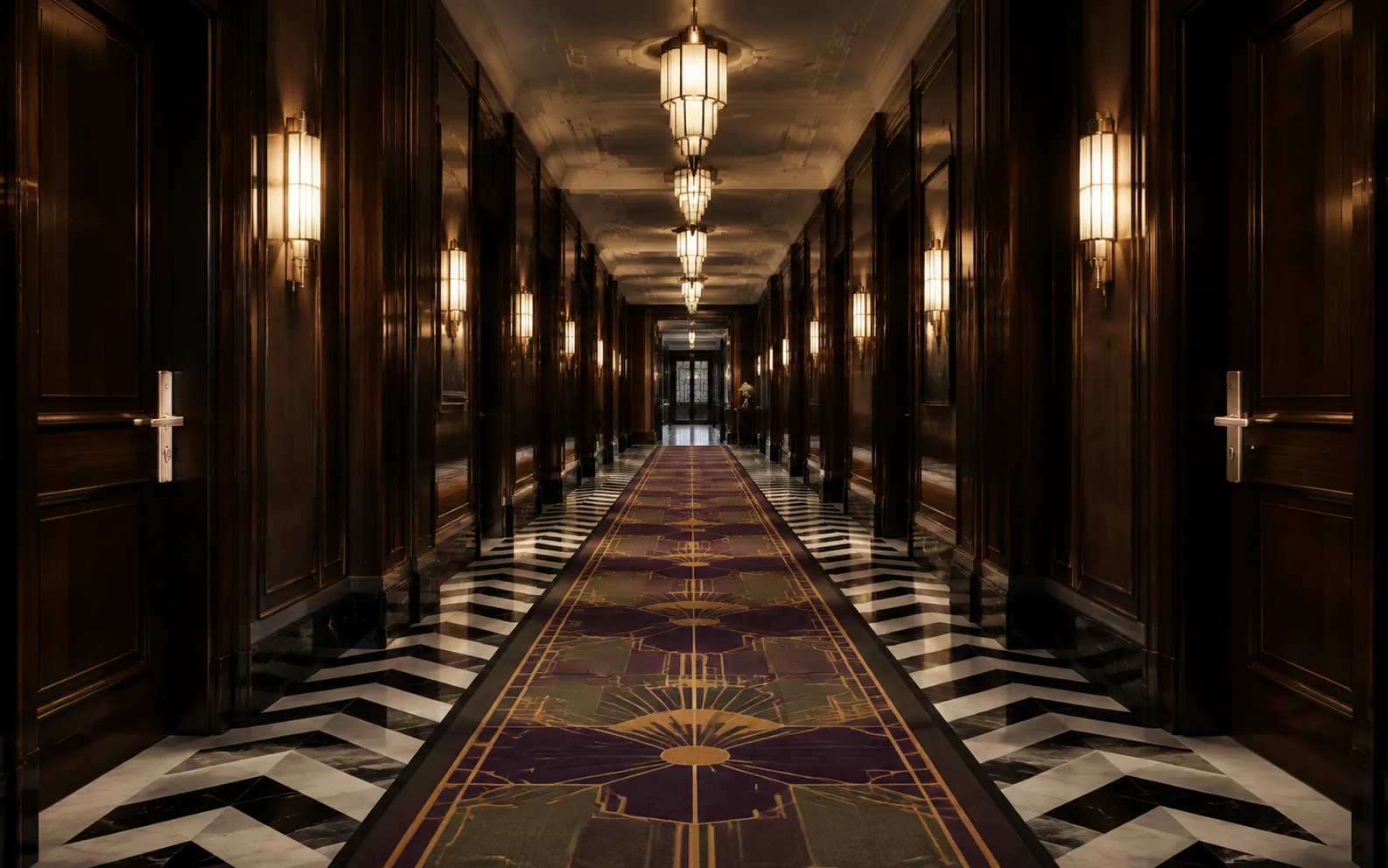
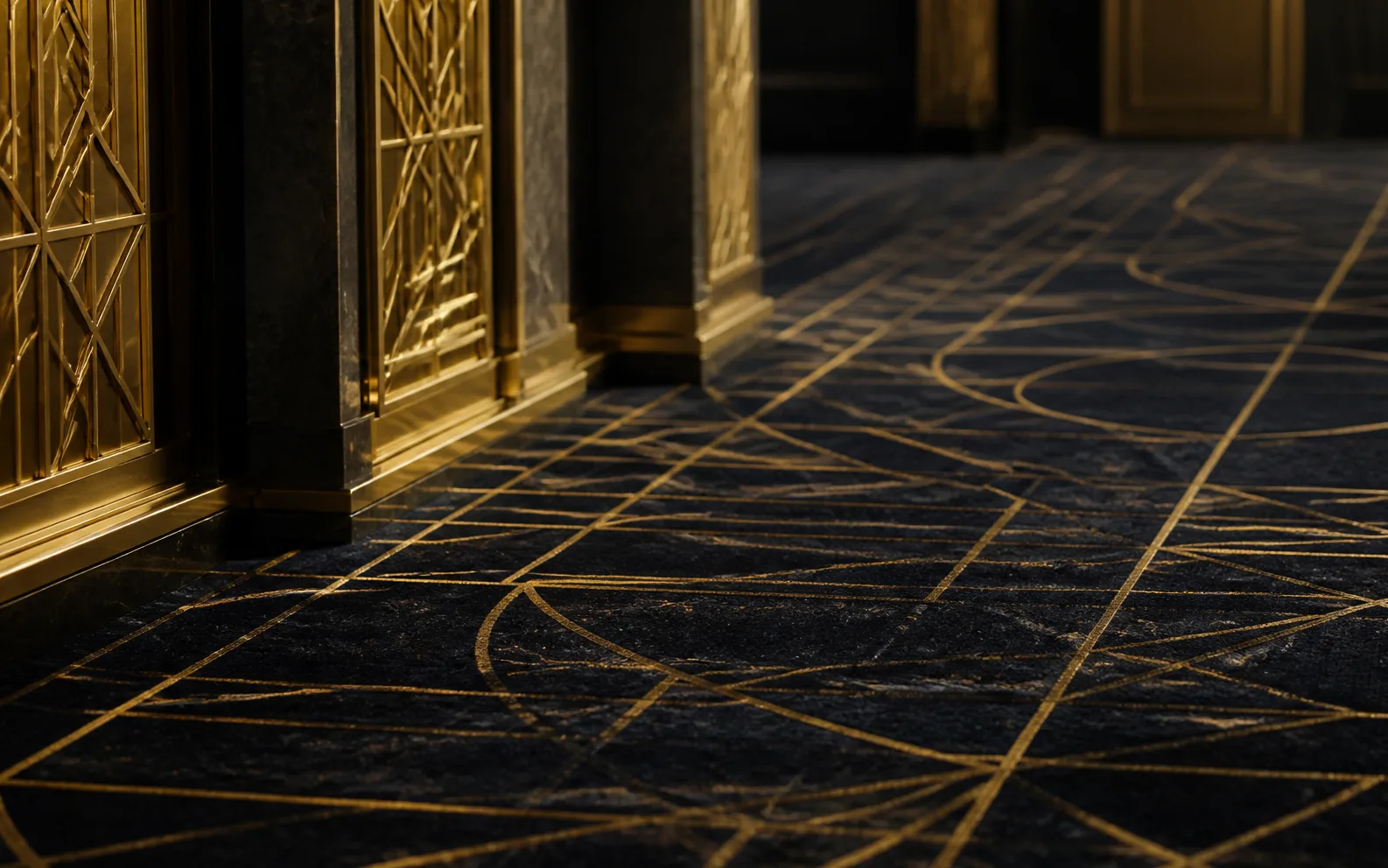
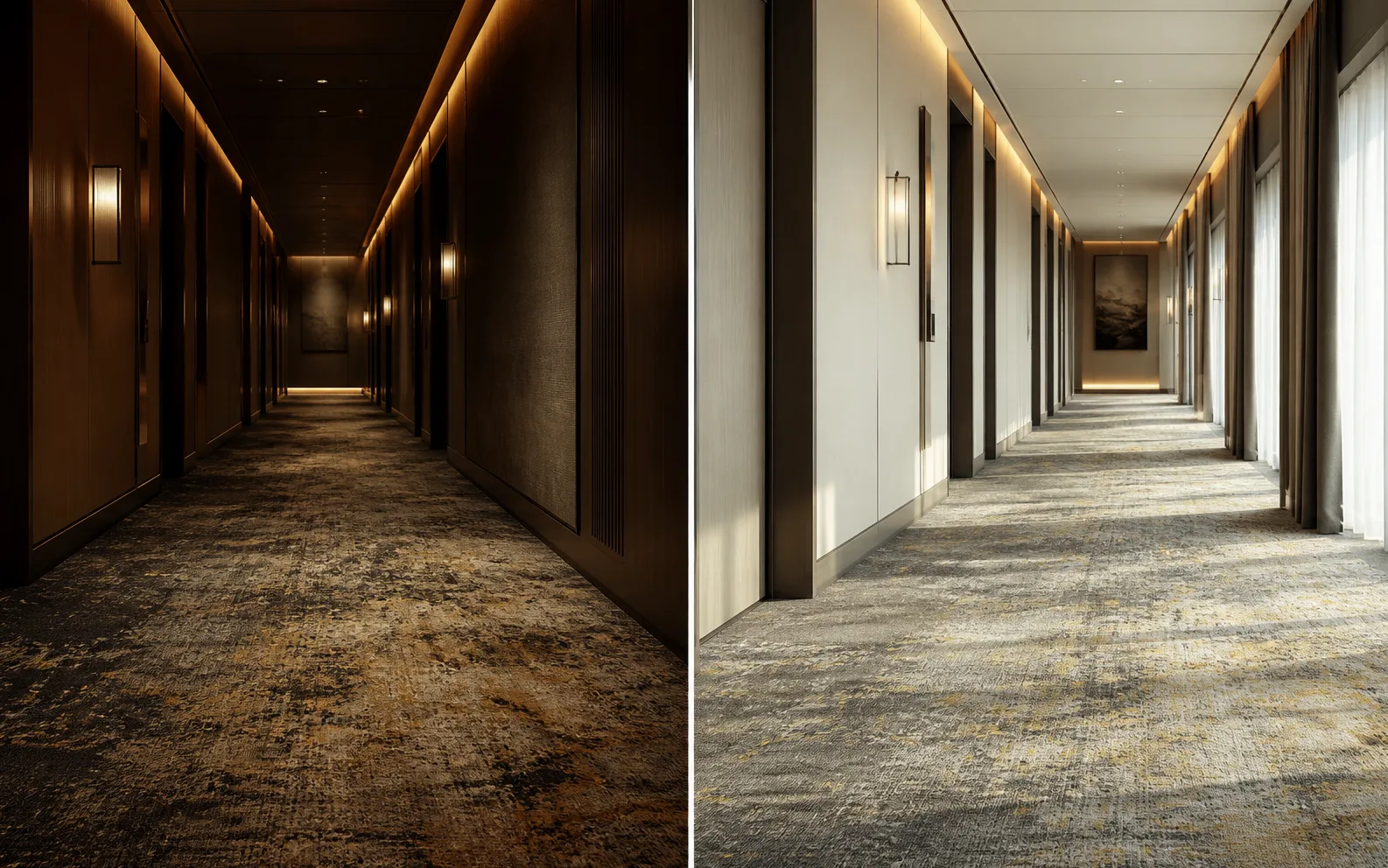
Guestrooms run quietest, close to patternless, leaving the performance to mirrors and coloured light. The corridor adds one notch, fine dense texture on an unchanged ground, reading by texture in daylight and by ground tone after dark when violet-blue and warm amber trade shifts on the walls and the grey refuses to bleed. Public space carries the highest concentration, geometry spread where people stop and photograph. Lift landings take the transitional mix, stitching three intensities into one route.
Safety was settled before the pattern
Corridors and public areas are specified to ASTM E648 Class I, critical radiant flux at or above 0.45 W/cm², alongside GB 8624 Class B1. Mirrors, synthetic finishes and coloured light that rarely switches off make static the practical complaint, so charge is held within 2 kV to CRI HT-101. The guestroom wing is the tightest enclosed volume in the building, so emissions follow FloorScore and the GB 18587 limits. Pattern strength is negotiable, these lines are not.
A sample you have to walk on
Sampling starts at A4, but interlocking geometry cannot be judged at that size, so a 1:1 mock-up is laid into a real corridor before owner, designer and ADA seal the sheet. Yarn stays on one dye lot and is pre-blended across lots, because shade drift is hardest to hide on a dark ground. In-line inspection watches pile height, density and registration, and a motif one grid out of true goes back to be rewoven in that stretch. The broadloom volume for the public areas runs two to three months and is booked by the quarter, which means the day the sample is signed also fixes which floors are laid first.
What the mirrors give away
Fitting tolerances show up fastest against mirror, so every seam was re-checked under the lighting scheme before it was accepted. The cleaning manual came in two versions matched to how each zone is read, one vacuum route for the surfaces you judge by texture and another for those you judge by ground tone, with stain treatment by material. Since the 2017 opening, pile flattening in the corridor is the first trace of traffic; the grey has taken no colour bleed and the geometry still ends where it was drawn.