 ADA FLOOR
Open expertise
What is a hand-tufted carpet?
ADA FLOOR Design Team · Published 2026-08-18 · Updated 2026-09-20
A hand-tufted carpet is made by inserting yarn into a backing with a tufting gun, allowing flexible control of pattern, colour, fibre and pile height.
Key points
A hand-tufted carpet is made by inserting yarn into a backing with a tufting gun, allowing flexible control of pattern, colour, fibre and pile height.
- Suitable for complex patterns and custom shapes.
- Wool, nylon, silk and blended fibres can be combined.
- Quality depends on detailing, density and finishing.
How the yarn gets in
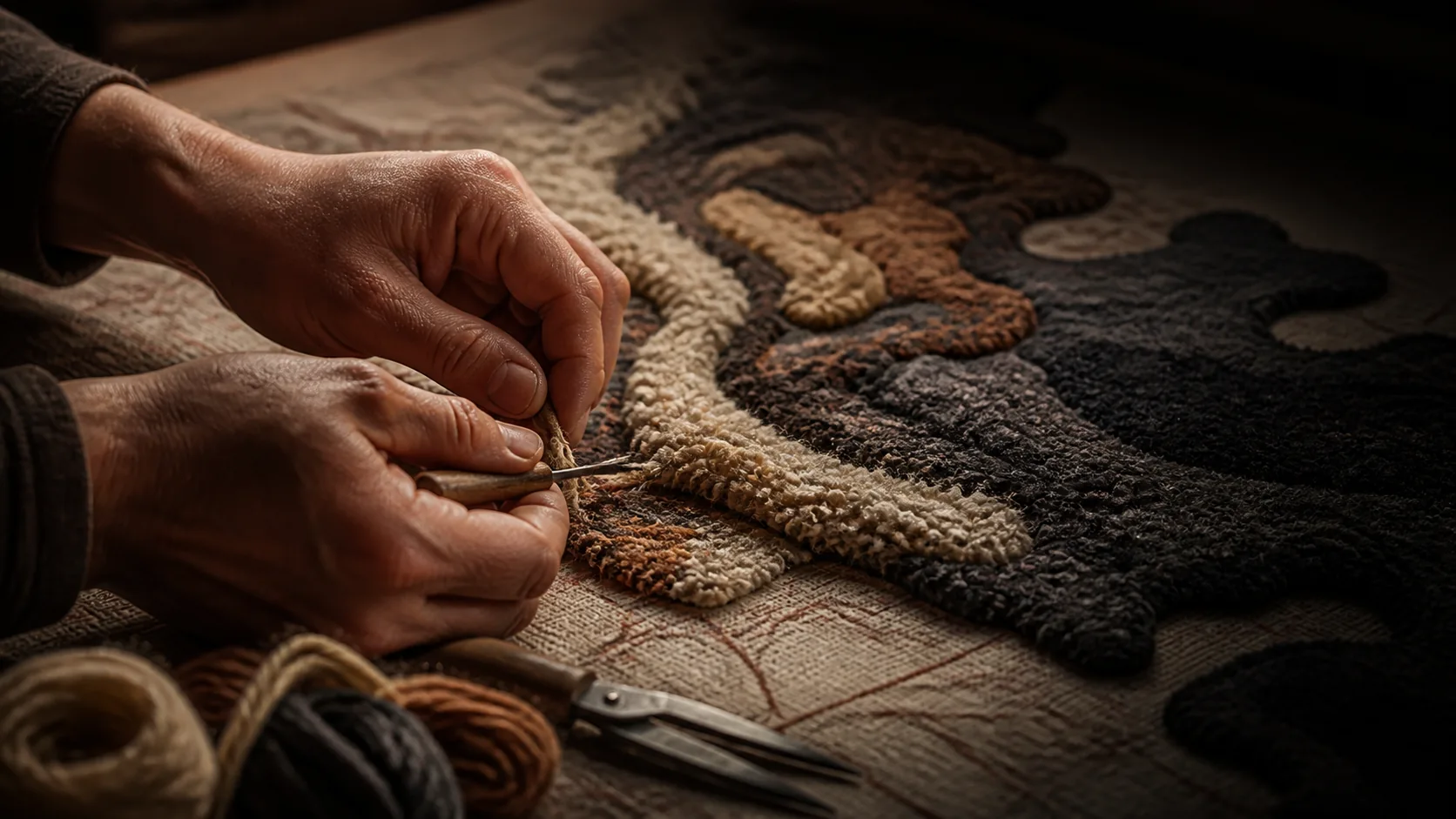
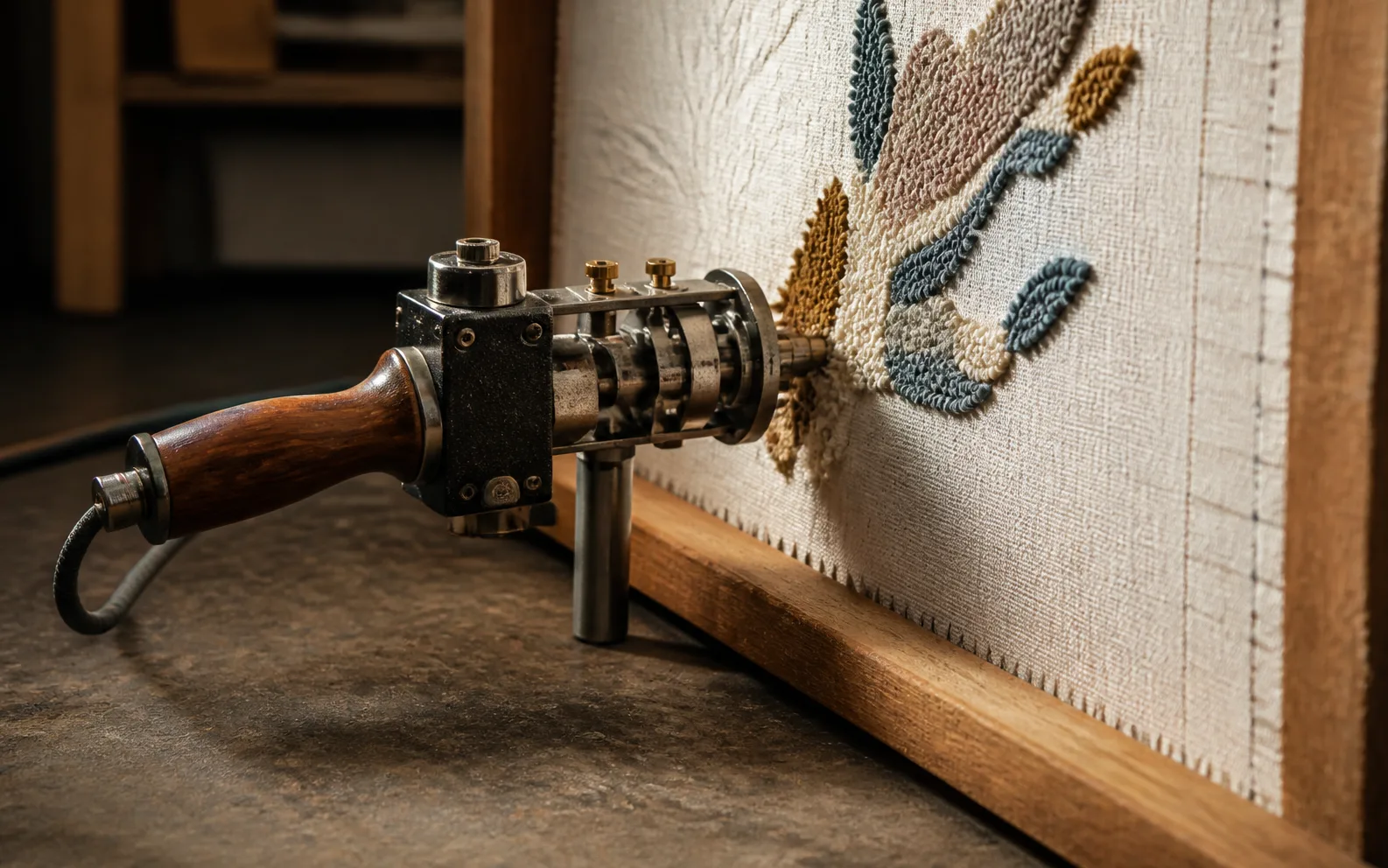
A pneumatic tufting gun drives yarn stitch by stitch through the primary cloth; the real forming happens afterwards, with hand shears and carving blades building the relief — the sculpted depth comes from the maker's scissors, not a machine programme. The pile is held by stitch density and the adhesive system, so the two things that decide quality, yarn and back glue, are precisely the two a buyer cannot see.
What it is good for
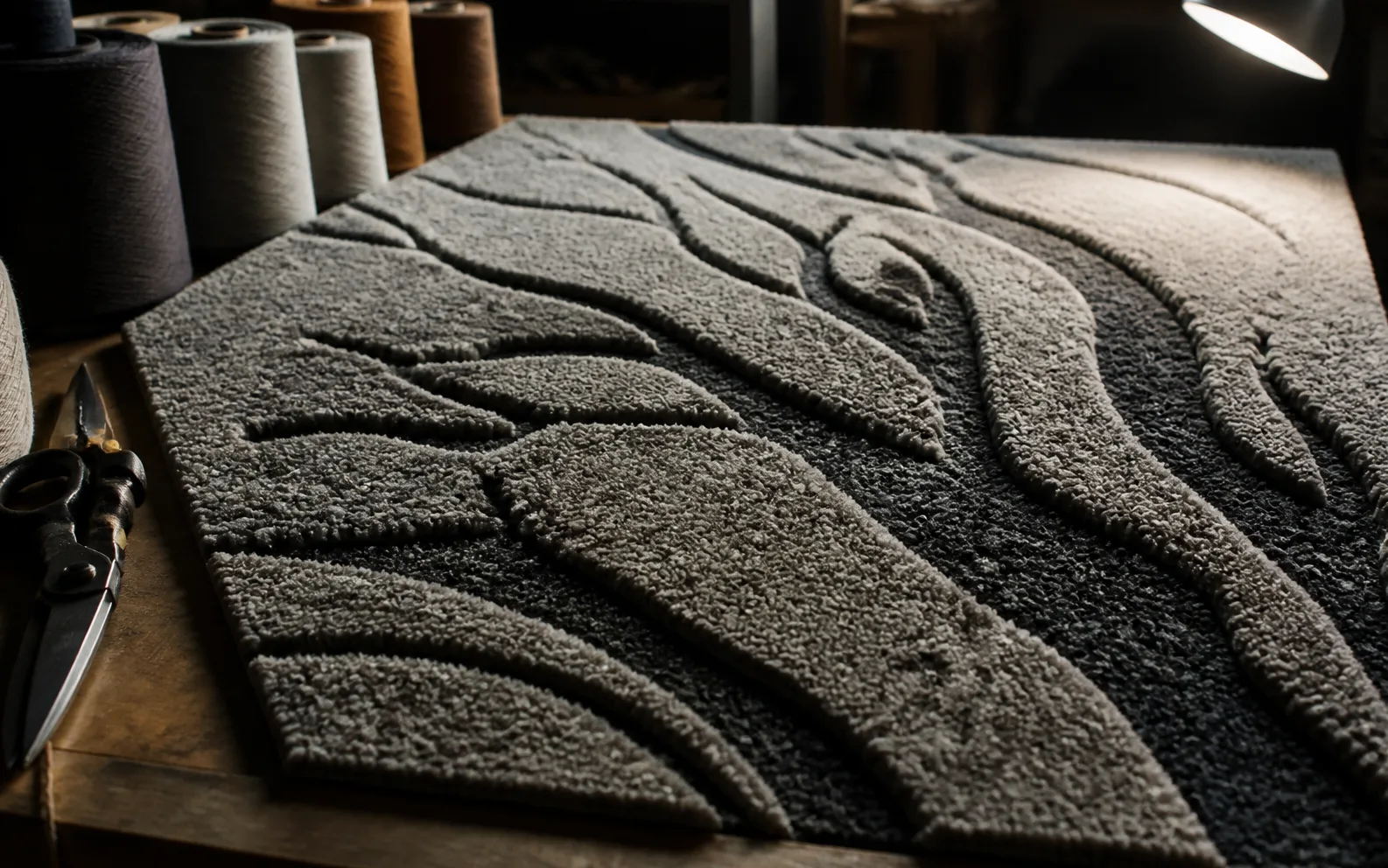
Everything a loom cannot chase: irregular cut-ups, multi-level pile, graded colour, patterns rescaled to fit one particular room. At Shanghai Greentown Rose Garden the crimson-and-gold scheme was re-scored on the floor to the proportions of the façades, with a separate design per function — all hand-tufted. At Banyan Tree Huangshan the bamboo shadows are controlled ink-density by ink-density, like ink wash worked flat.
How to judge one
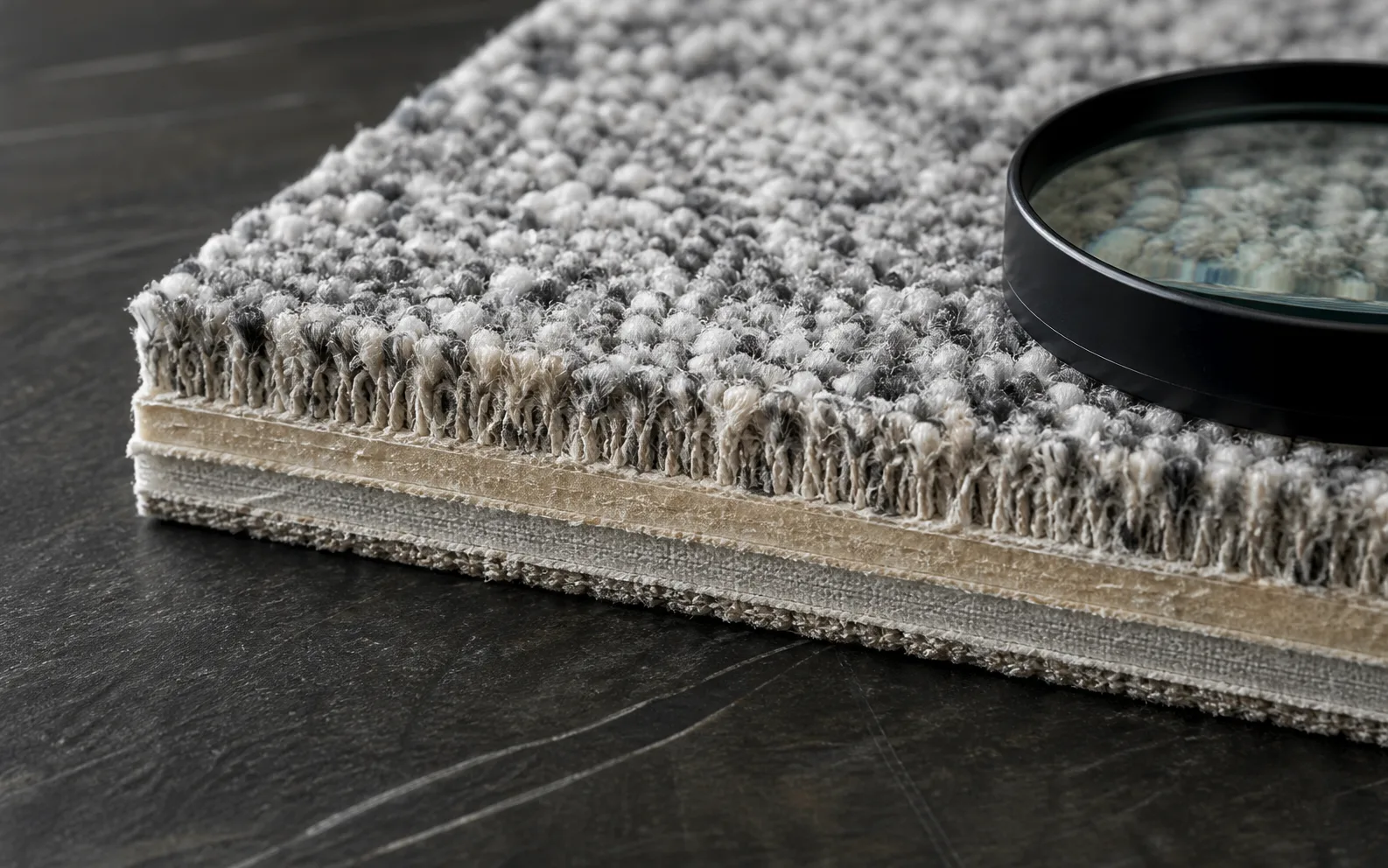
Three things: the resilience and batch of the yarn, the tufting stitch density, and the adhesive-and-backing system. Built properly, a tufted carpet lasts many years; built carelessly, it wears out sooner than a decent machine-woven piece — the word “handmade” guarantees nothing on its own. Specify yarn content and density on the order form and check against a physical sample: the cross-section of a carpet back does not lie.