 ADA FLOOR
Open expertise
How should hotels select carpet materials?
ADA FLOOR Design Team · Published 2026-08-18 · Updated 2026-09-20
Hotels should specify carpet by zone, matching fibre, construction, density and fire performance to the traffic and maintenance needs of each area.

Key points
Hotels should specify carpet by zone, matching fibre, construction, density and fire performance to the traffic and maintenance needs of each area.
- Separate lobby, corridor, room and ballroom requirements.
- Evaluate wear, fire, stain, colourfastness and acoustic needs.
- Approve samples in the real lighting environment.
Map the traffic before the materials
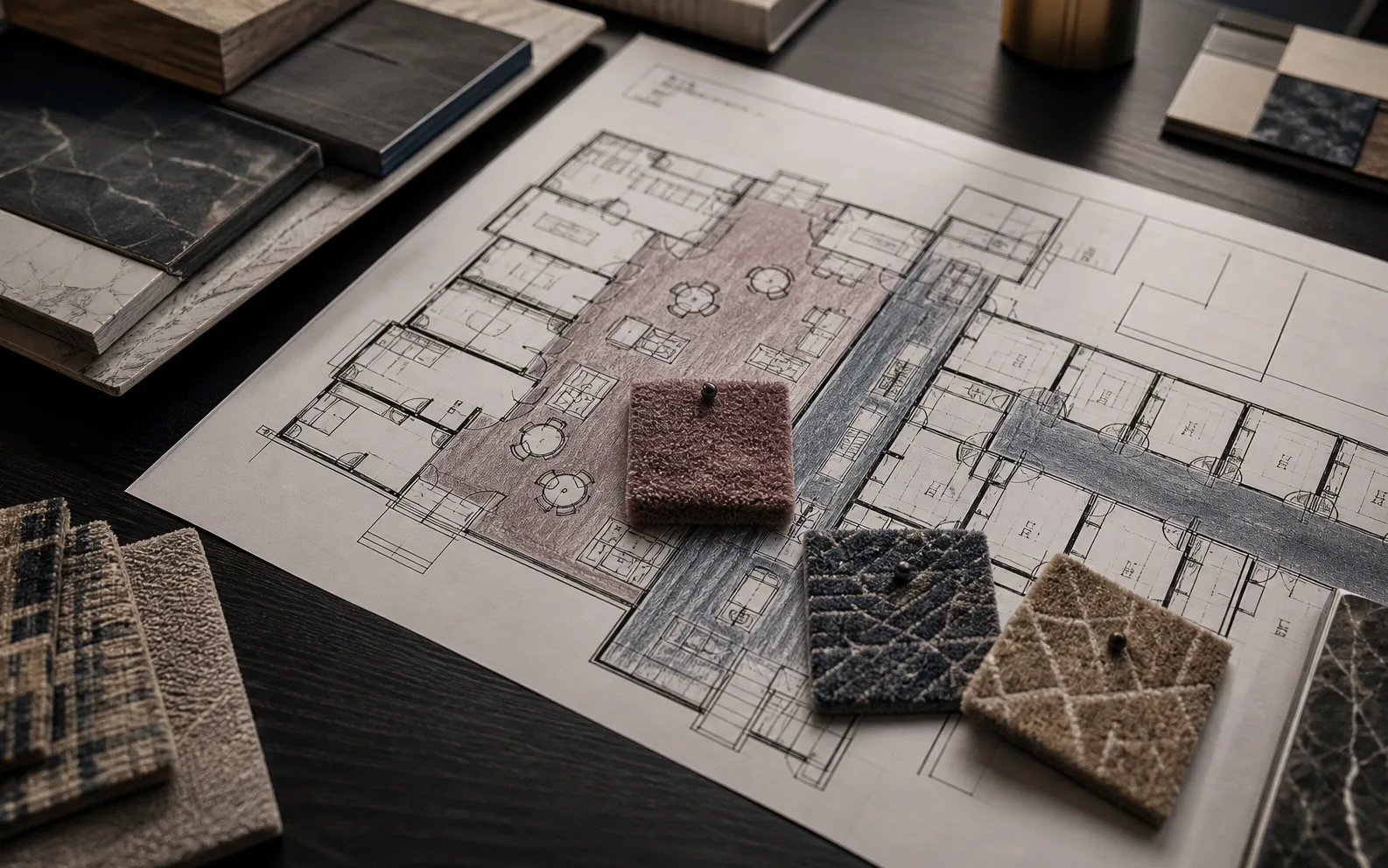
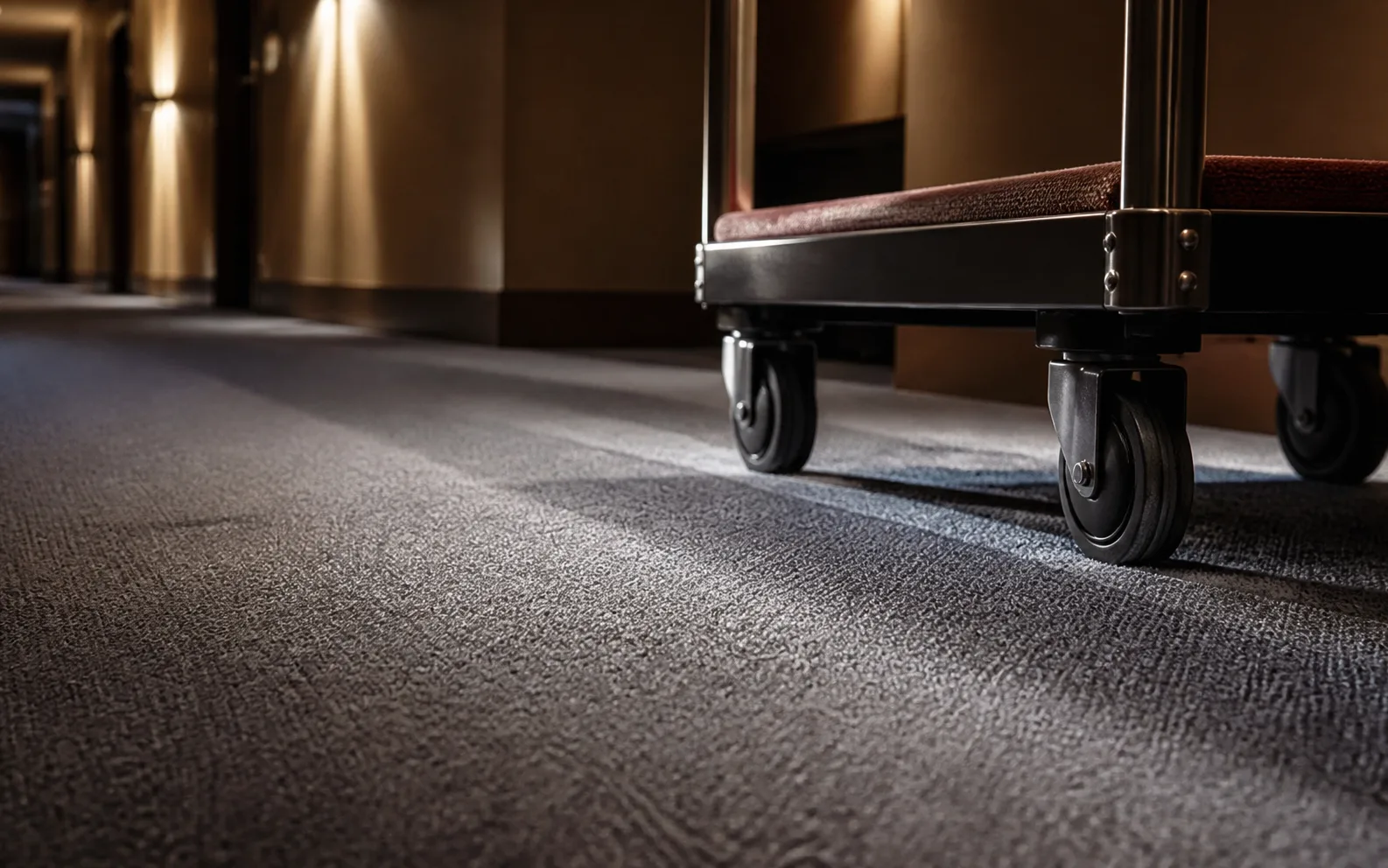
The lobby carries the image, so pattern expression and large-area flatness lead — the Peace Hotel's 984.4 square metres were woven on a 4-metre Axminster loom. Corridors carry traffic, so density and abrasion lead, and the pile must get out of the luggage cart's way: some hotels hold guestroom pile under 7 mm, a rule left by carts and wheelchairs. Rooms and villas take the tactility back and may raise it again.
Fibre, fire and backing are three tickets in
Wool or high-wool blends serve the texture-led lobbies and guestrooms; high-density nylon serves corridors and pre-function. Fire performance is hard contract language — B1 ratings and rubber backing recur through high-rise hotel specs. At seaside projects the moisture-managed backing signs off before any yarn is considered. Leave any of the three unaddressed and the prettiest pattern is moot.
Acoustics and light decide the last point
Guestroom reverberation is a number signed for jointly by carpet, drapery and wall soft-finishes; pile height and density are tuned to the acoustic target before a mock-up room is approved. Sample sign-off has to happen under the real lighting at the real viewing distance — colour and lustre judged under showroom lamps do not count. The final acceptance test is plain: walk the loop twice and look down once.