 ADA FLOOR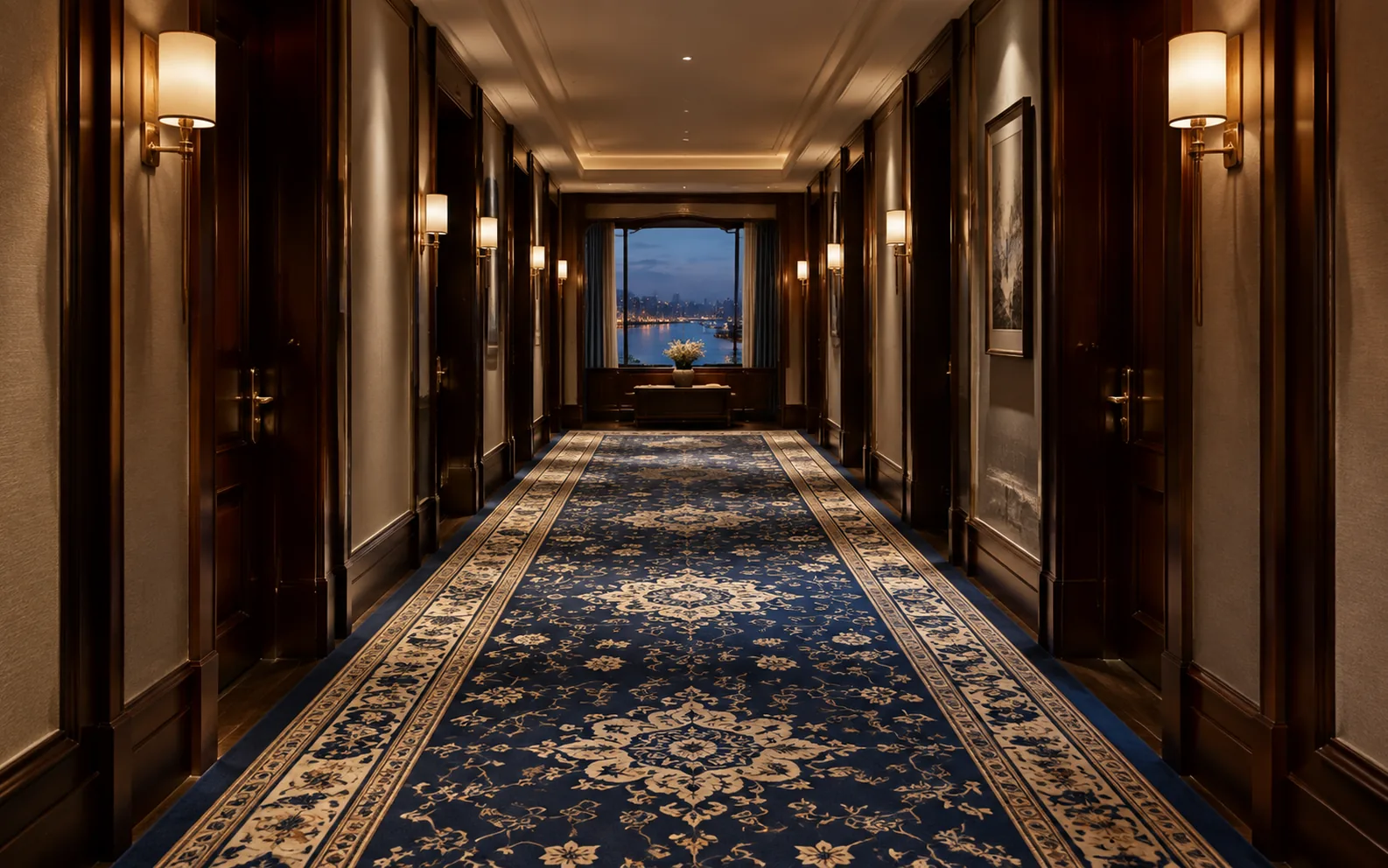
Six hundred and seventy-three rooms, two wings with different temperaments. ADA FLOOR designed and produced the carpet for both wings and their public areas, one system specified twice, once per temperament.
One hotel, two personalities
The Royal Pacific sits in China Hong Kong City, Tsim Sha Tsui. Opened 1988, renovated 2012, a 673-room ship in the middle of the action. Two kinds of guests share the hull: those who came for the water and those bargaining for quiet inside the city. Hence two visual systems, each minding its own door.
Standing up to the harbour's brightness
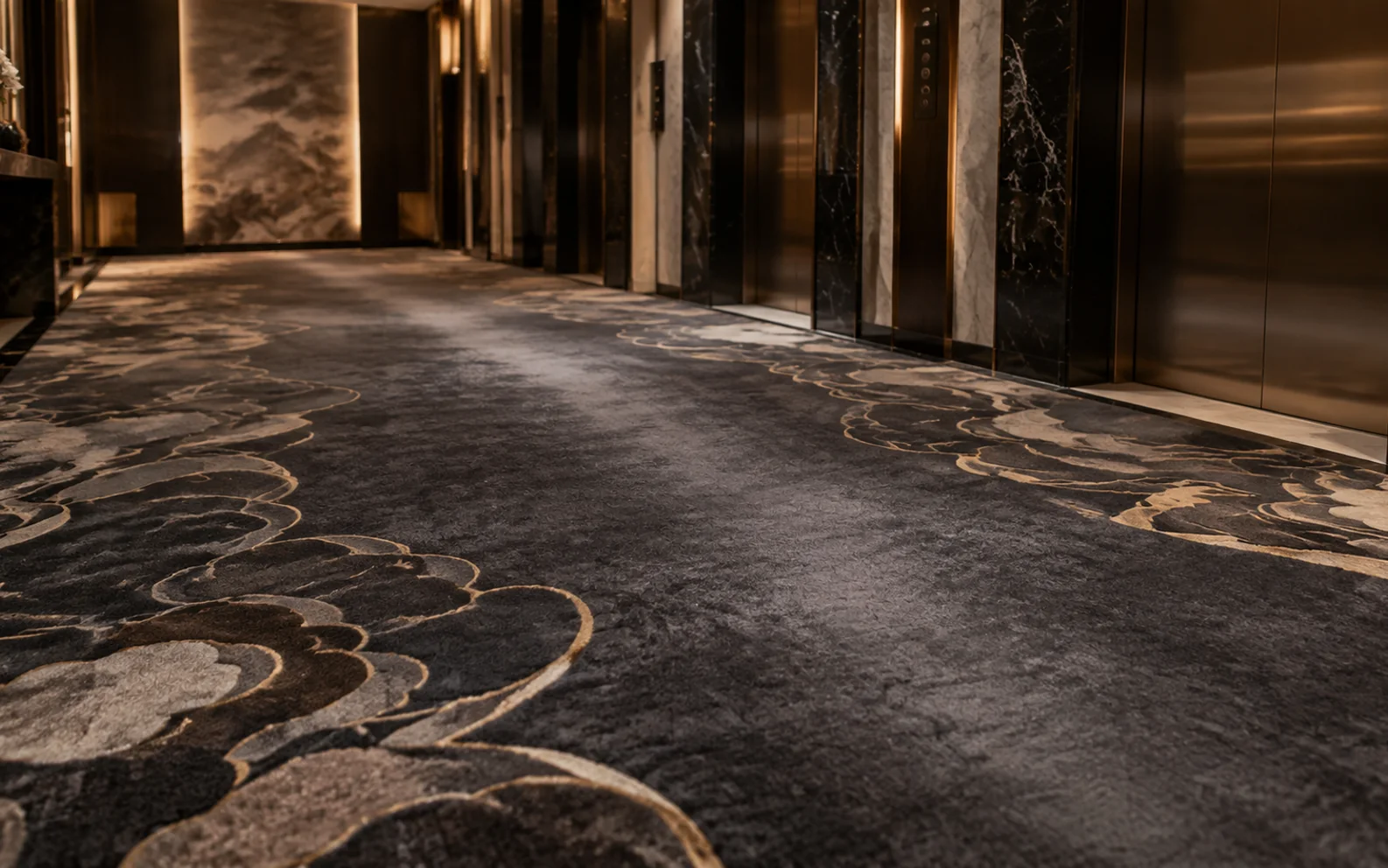
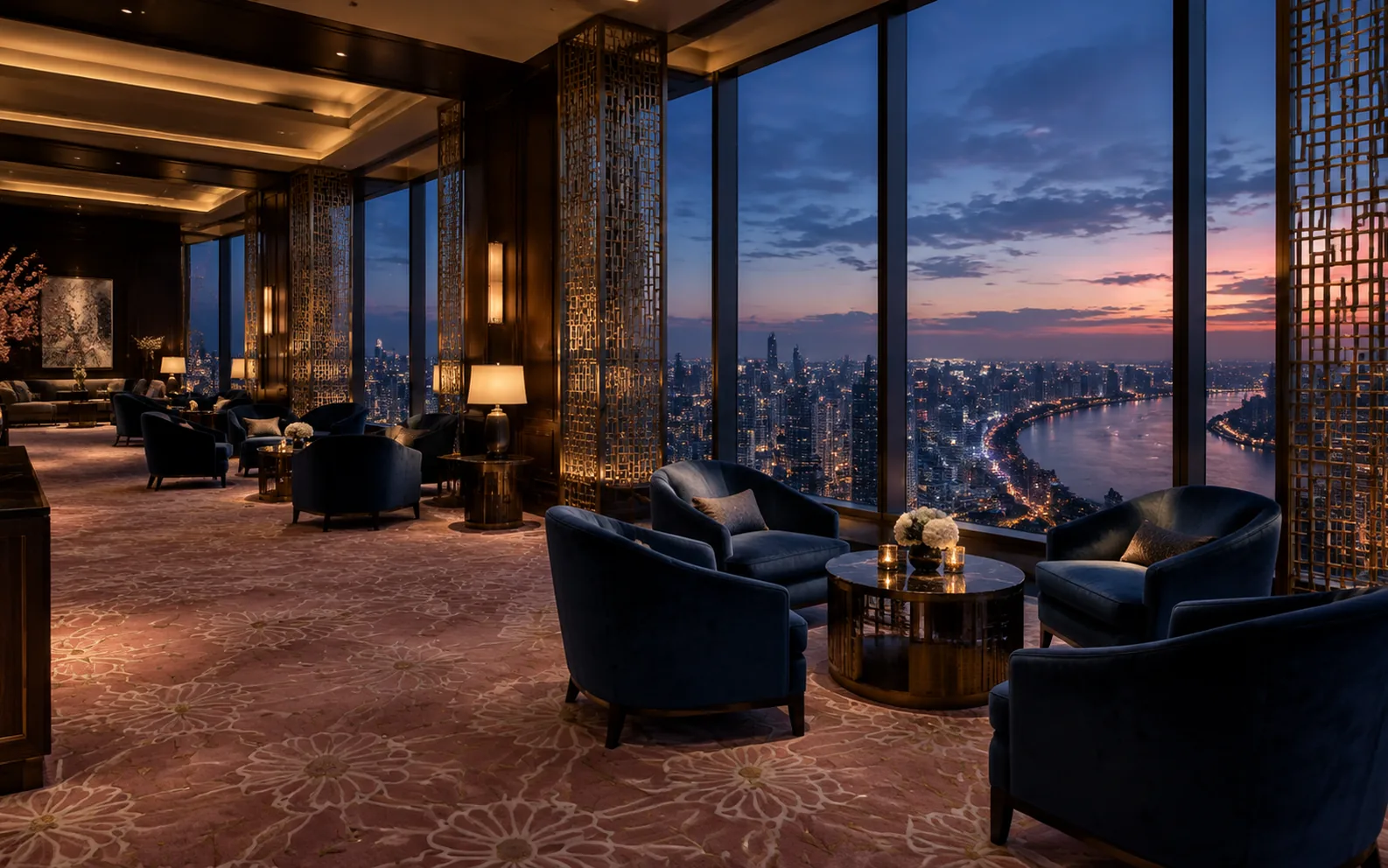
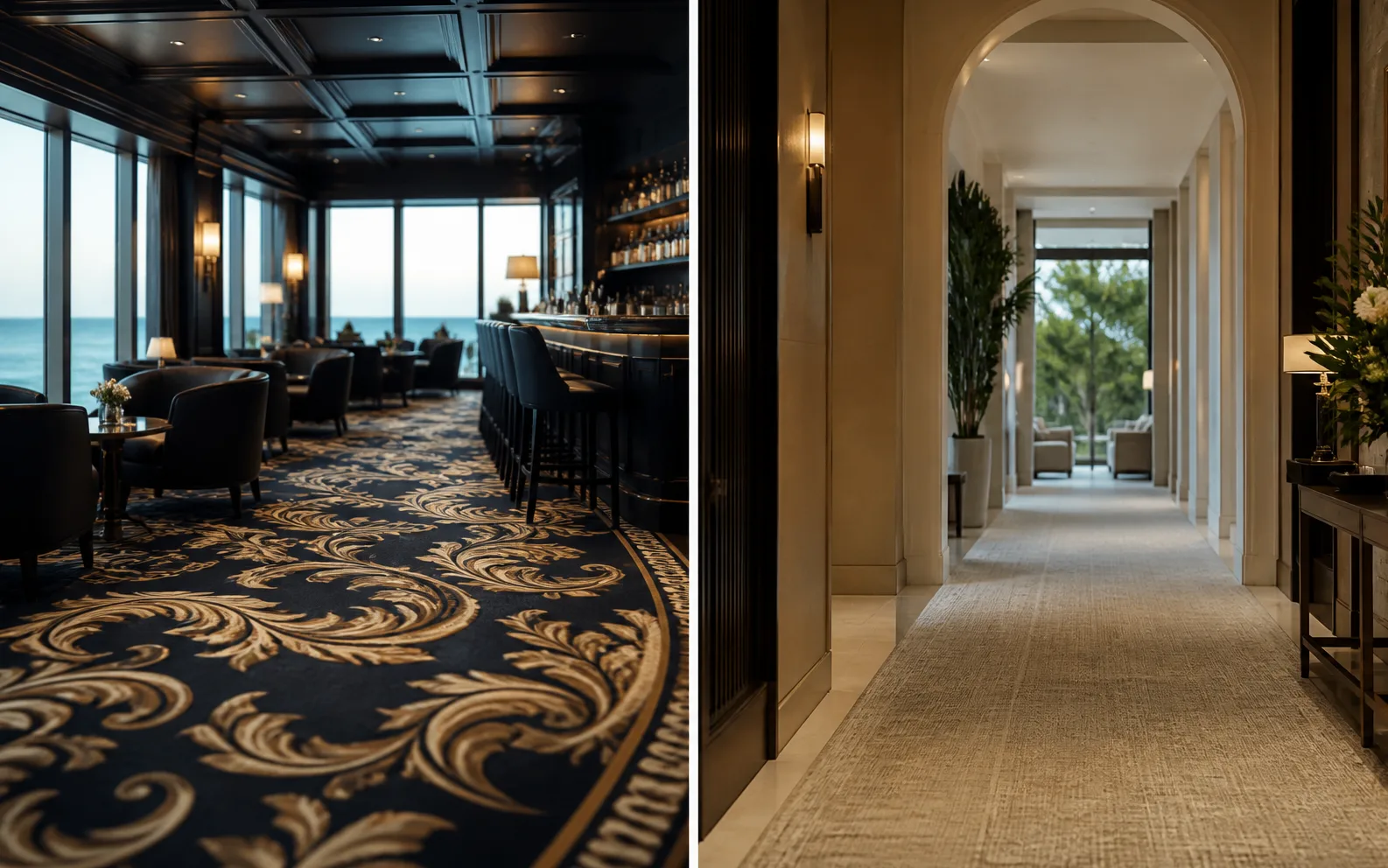
The sea-view wing looks outward, where harbour light sets no daytime ceiling. Its floors carry oriental patterns on dark grounds. The base holds, the pattern speaks: brightness belongs to the window, weight to the floor, and only a balanced ledger keeps the two from fighting.
Returning quiet to the garden
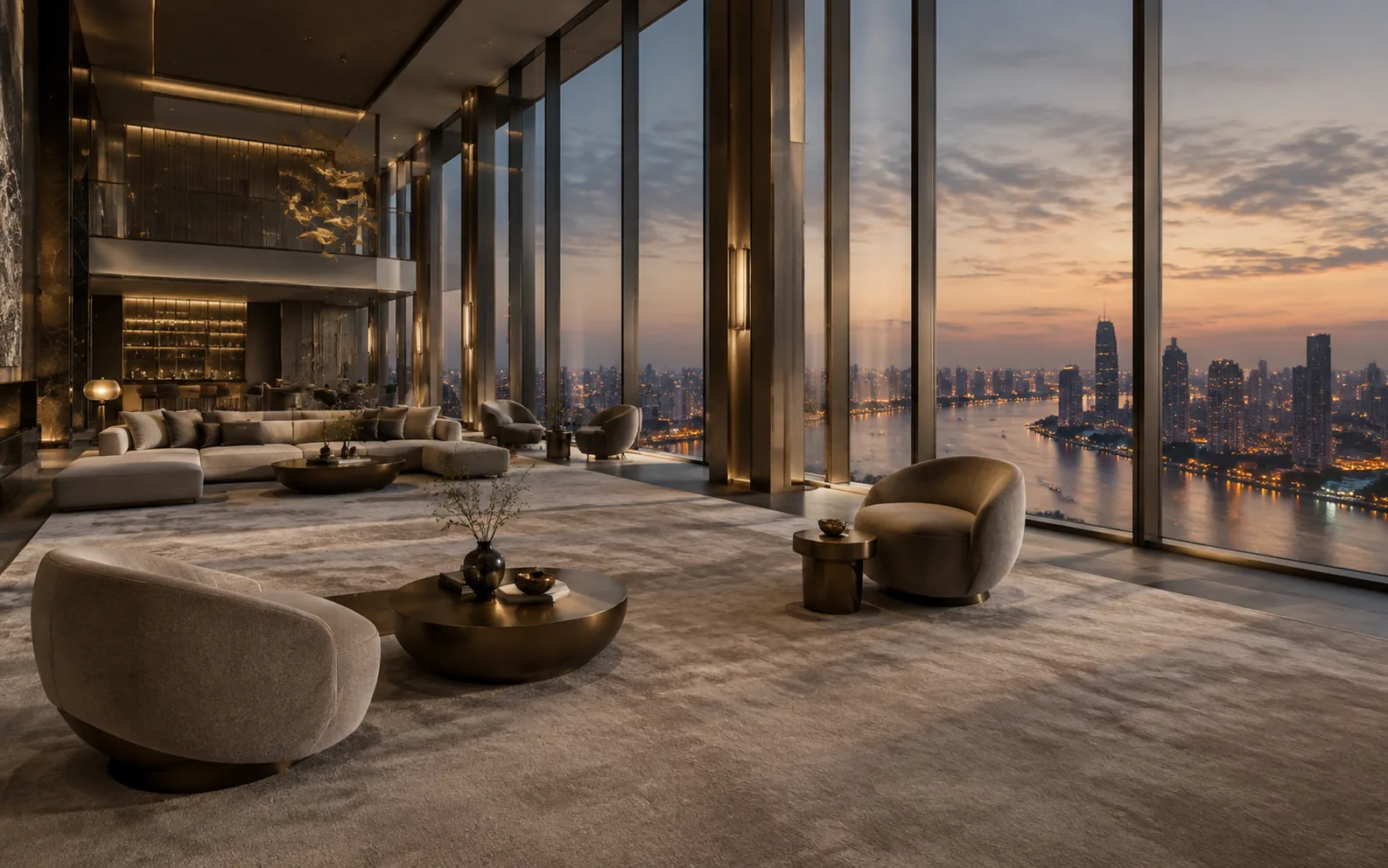
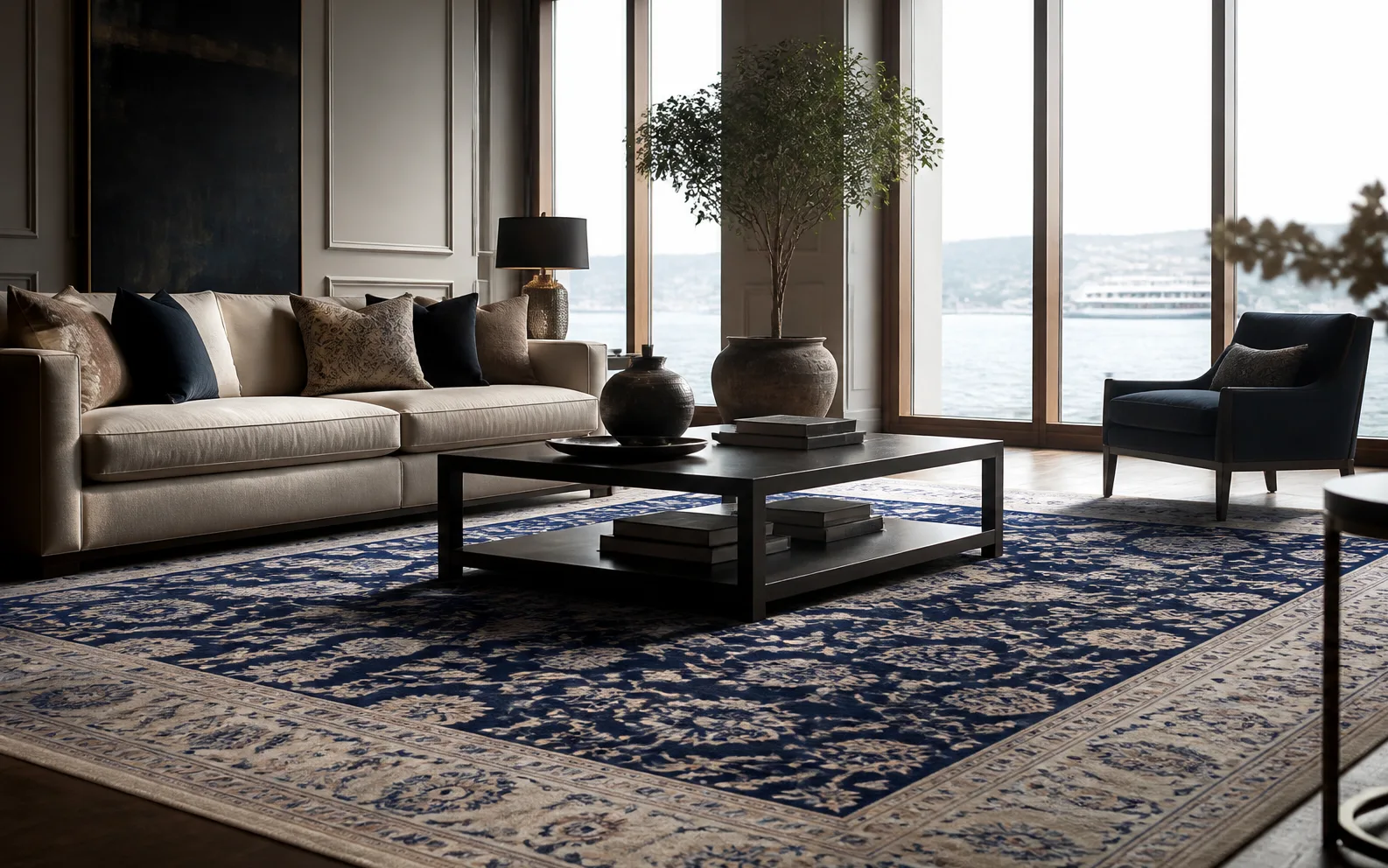
The garden-view wing faces inward. There the scheme switches to simple tones and low-density pattern, handing quiet back to the courtyard. The corridor stops adding drama so the eye can travel through the room and land in the greenery. One hotel, two wings, each carpeted to its own temperament.
The seam, and the ledger
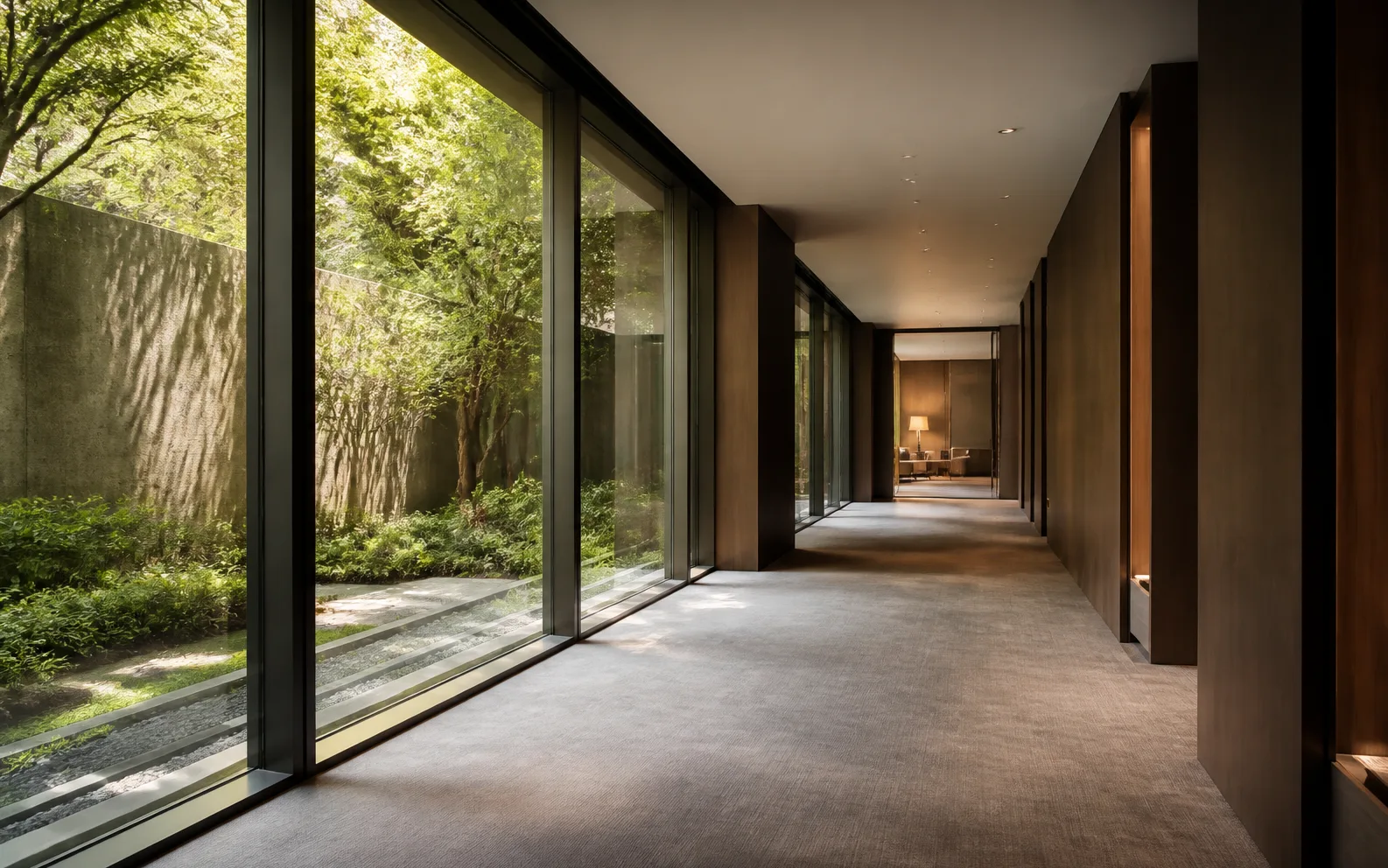
Wings may differ, guests may not live in two worlds. Public areas stitch the pair together with transitional carpets. The other half of the brief is bookkeeping: at a scale of 673 rooms, durability and ease of maintenance aren't bonuses, they're the entry ticket. Every pattern here has to still look like itself after years of daily traffic.
Two acoustics across 673 keys
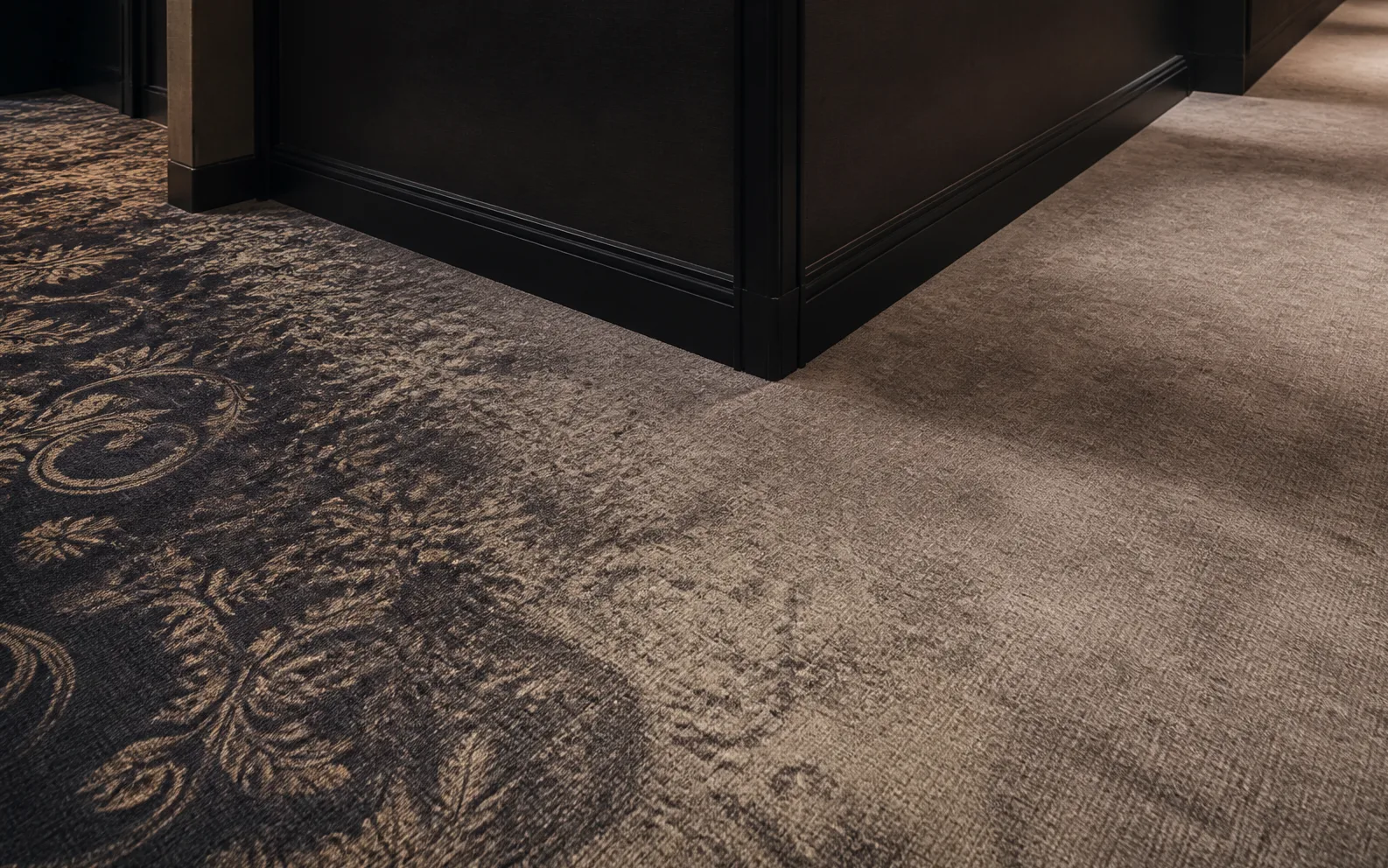
The Harbour Wing and the Garden Wing are laid out differently and behave differently. The older block carries more hard surface and returns noticeably more echo, so carpet and underlay are configured separately for each: corridors and rooms checked against impact-sound improvement, where carpet with underlay typically contributes 24 to 33 decibels under ISO 10140-3 and ASTM E492. Public areas follow a reverberation target of 0.4 to 0.6 seconds in the mid band. Fire performance is verified against both GB 8624 Class B1 and ASTM E648, with local acceptance governing.
Living with an oriental pattern next to a plain one
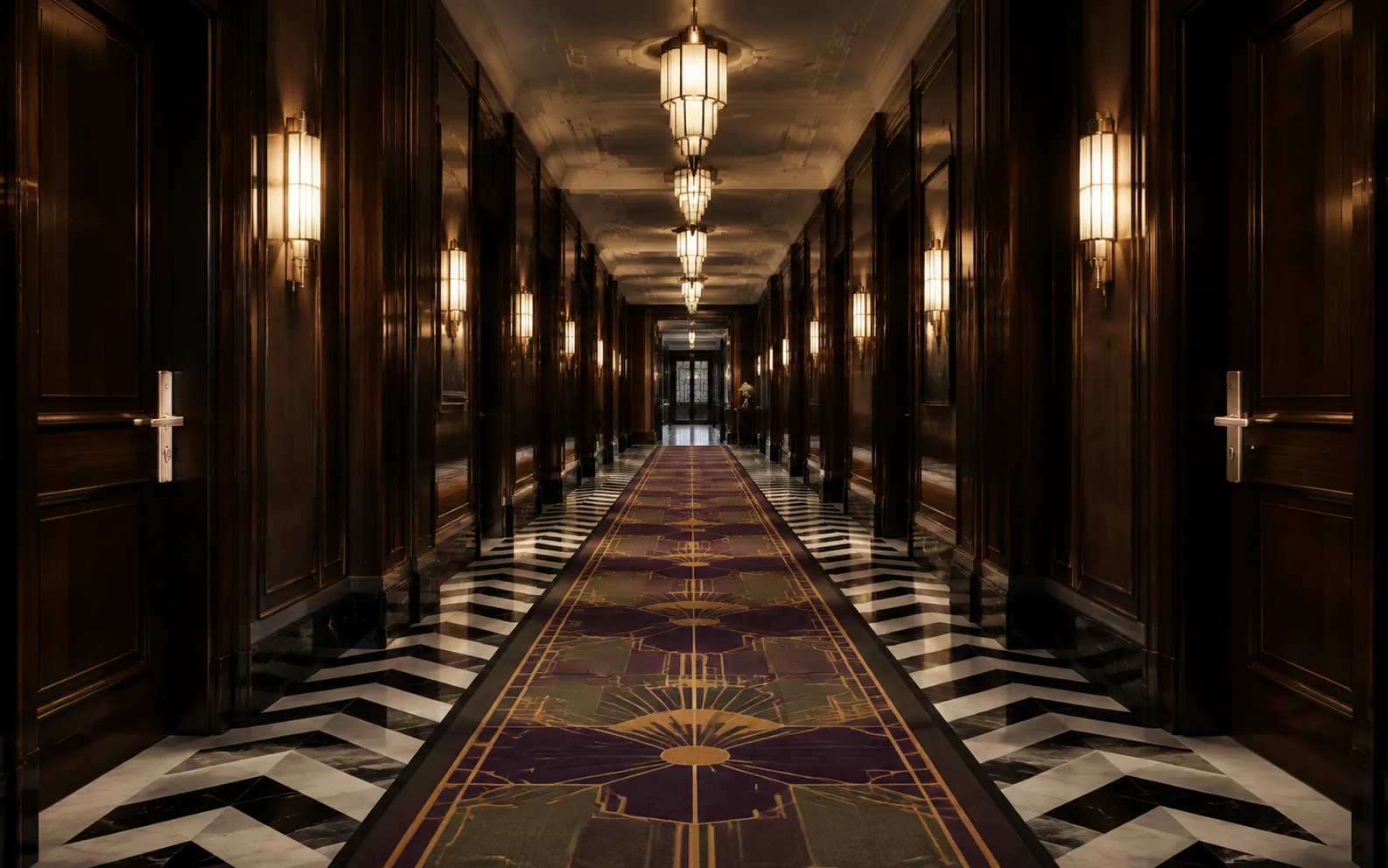
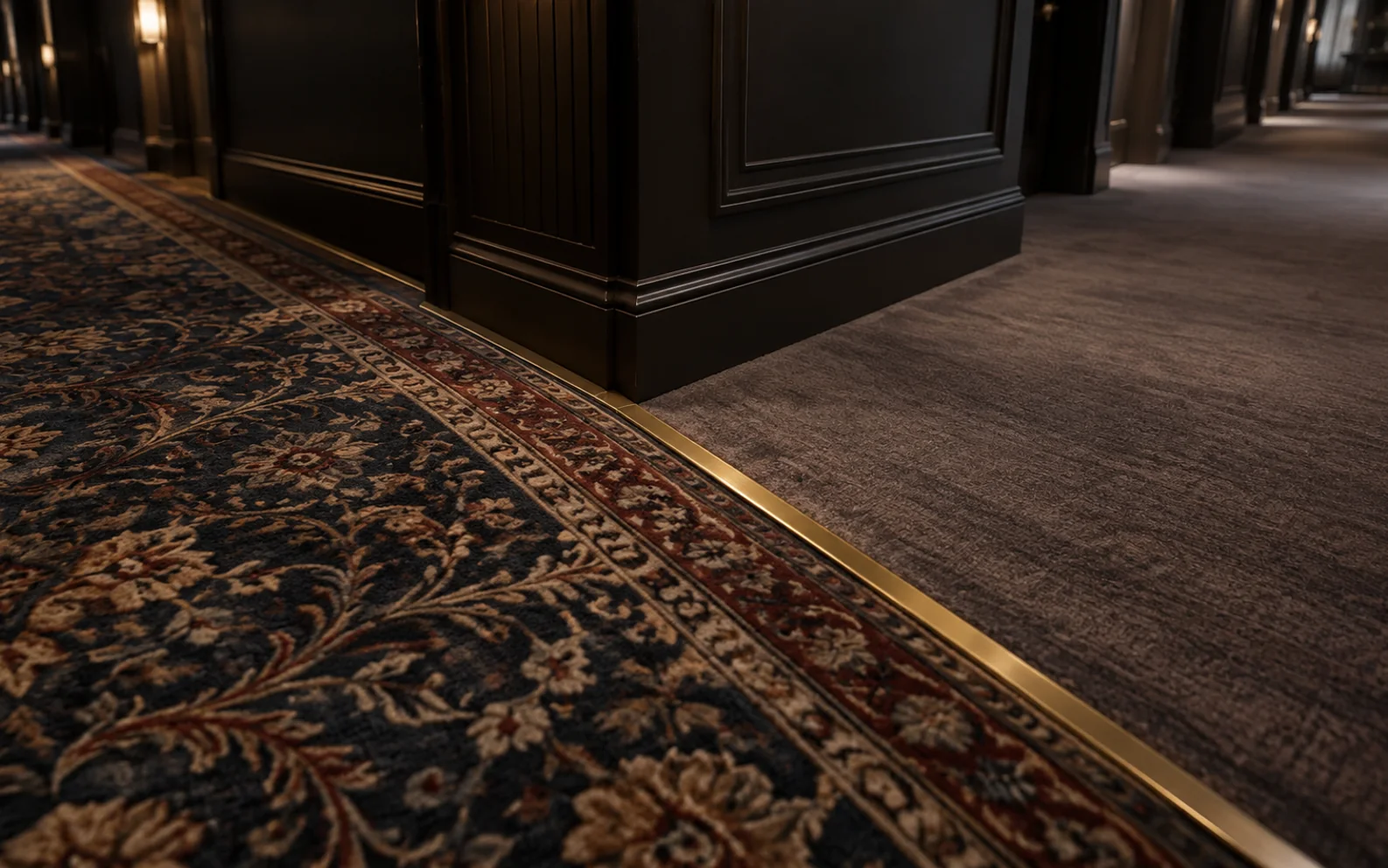
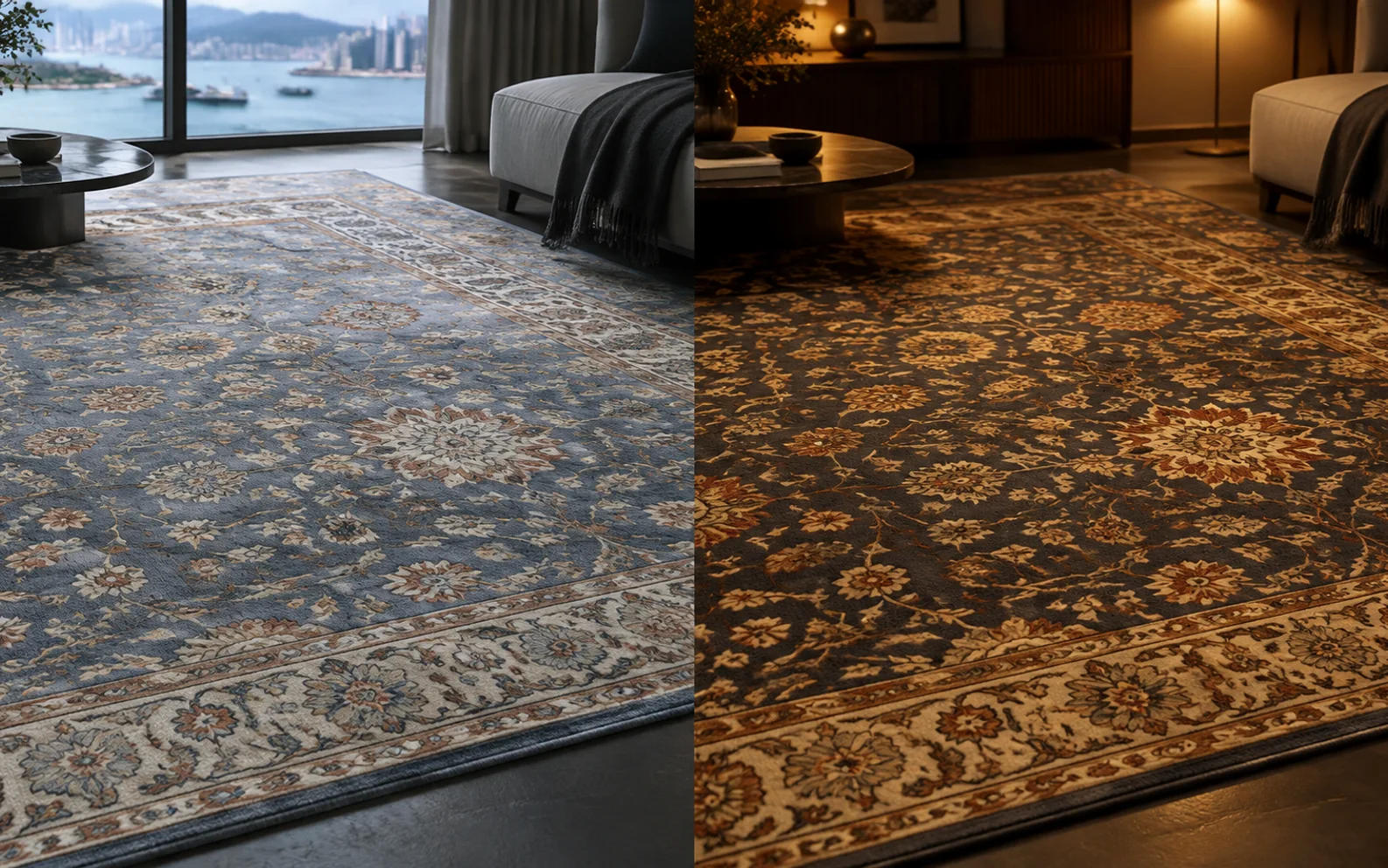
Each wing has its own floor language, and the junction decides whether the hotel reads as one. The answer is to place the boundary where nobody lingers — at the stair hall or a turn in the main route — and resolve it with a metal transition rather than letting two patterns fade into each other. At sampling, both carpets were laid side by side in the same corridor and read under two lighting conditions to confirm they sit at similar brightness, so one wing cannot look tired while the other looks new.
A 1988 building, maintained after 2012
Operation in an older hotel runs in rotation. Six hundred and seventy-three keys cannot be closed at once, so floors are replaced in batches, and a colour can only be re-ordered years later if the pattern number, yarn recipe and dye lot are still on file. Wear still concentrates at the lift halls and outside doors, which are graded more often than the rest. Keeping one pattern family through the refurbishment is what allows a repaired stretch to disappear into the old floor.