 ADA FLOOR
Open expertise
Why awkward rooms go back to hand tufting
ADA FLOOR Design Team · Published 2026-09-21
In curved, non-rectangular rooms with many terminations, the roll width makes the design decisions first. Hand tufting is not nostalgia — it puts a one-to-one drawing straight onto the backing.
Key points
In curved, non-rectangular rooms with many terminations, the roll width makes the design decisions first. Hand tufting is not nostalgia — it puts a one-to-one drawing straight onto the backing.
- Rolls come in fixed widths, so shaped spaces can only be cut and joined.
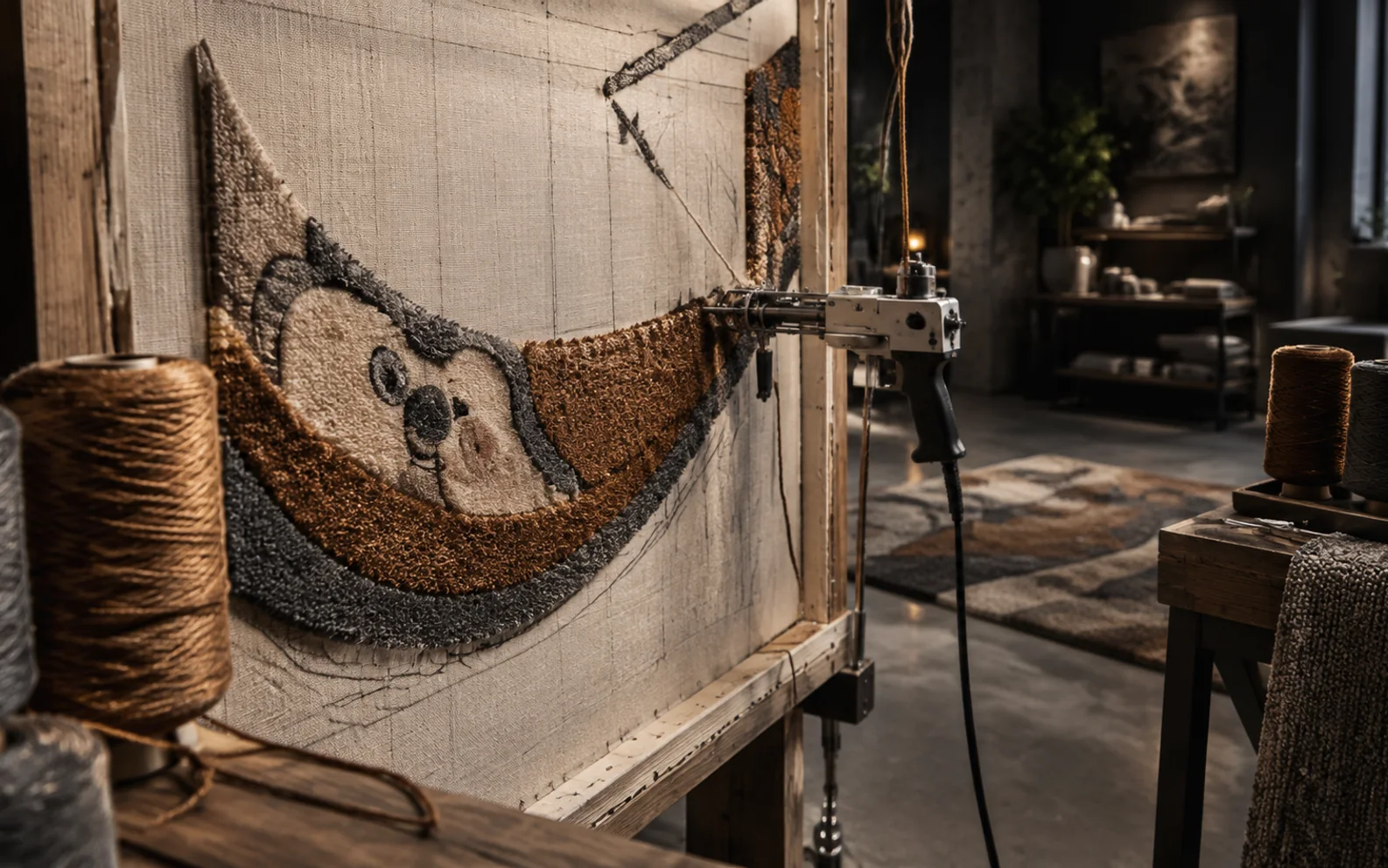
- Hand tufting follows the cartoon, keeping curves and medallions intact.
- Regular large areas still belong to a loom; most projects mix the two.
Where a roll stops
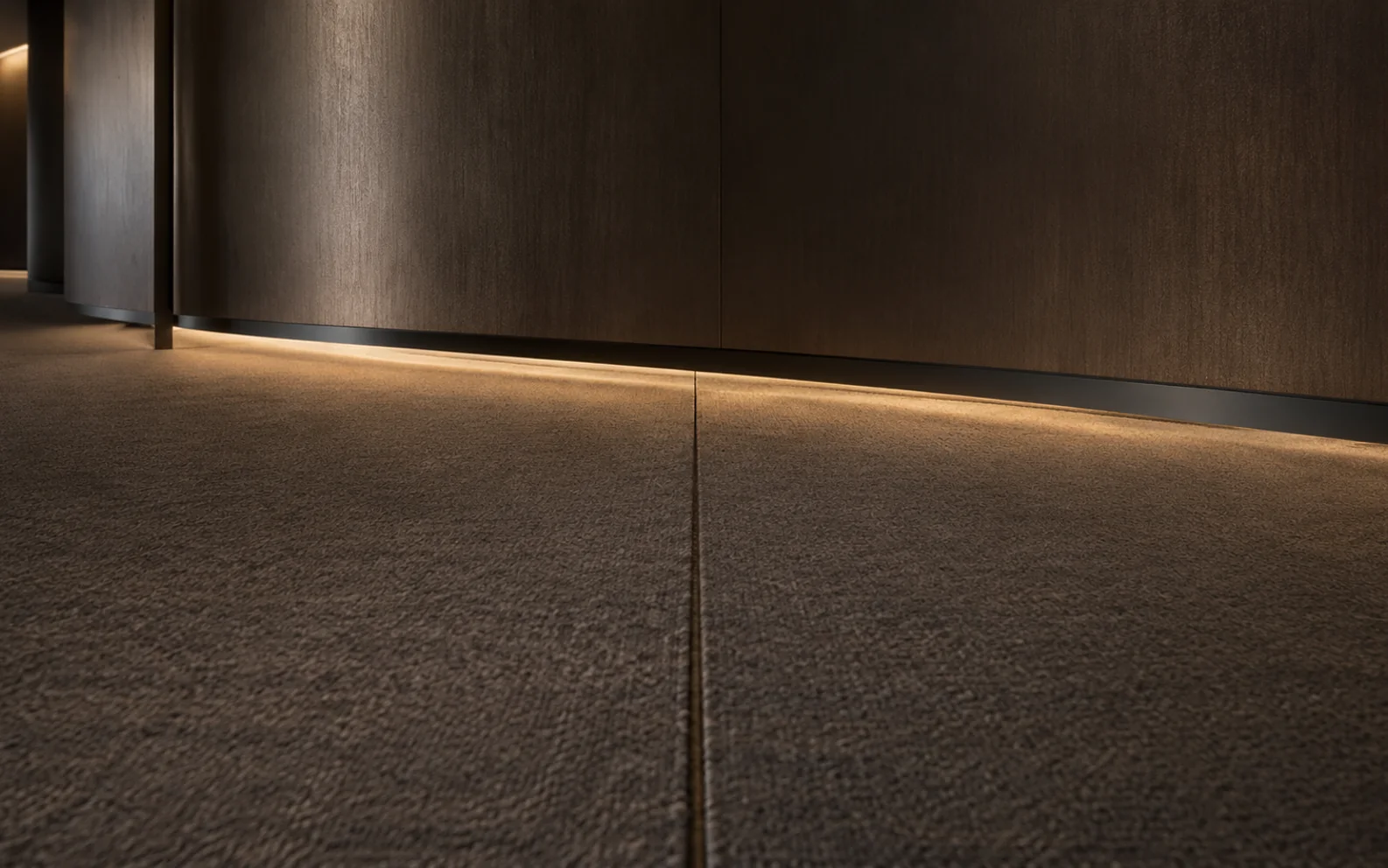
Woven and tufted carpet arrives in fixed widths, and on site the only operations left are cutting and joining. In a straight corridor that costs nothing. Introduce a curved wall, a non-right-angle return, or a circular floor meant to be seen whole, and the joint lands in the centre of the view. The carpet record for the quarry hotel at Sheshan is explicitly marked hand-tufted, which is what a building set inside a rock pit asks for: corridor lengths and wall angles that never repeat.
Two ways to draw a curve
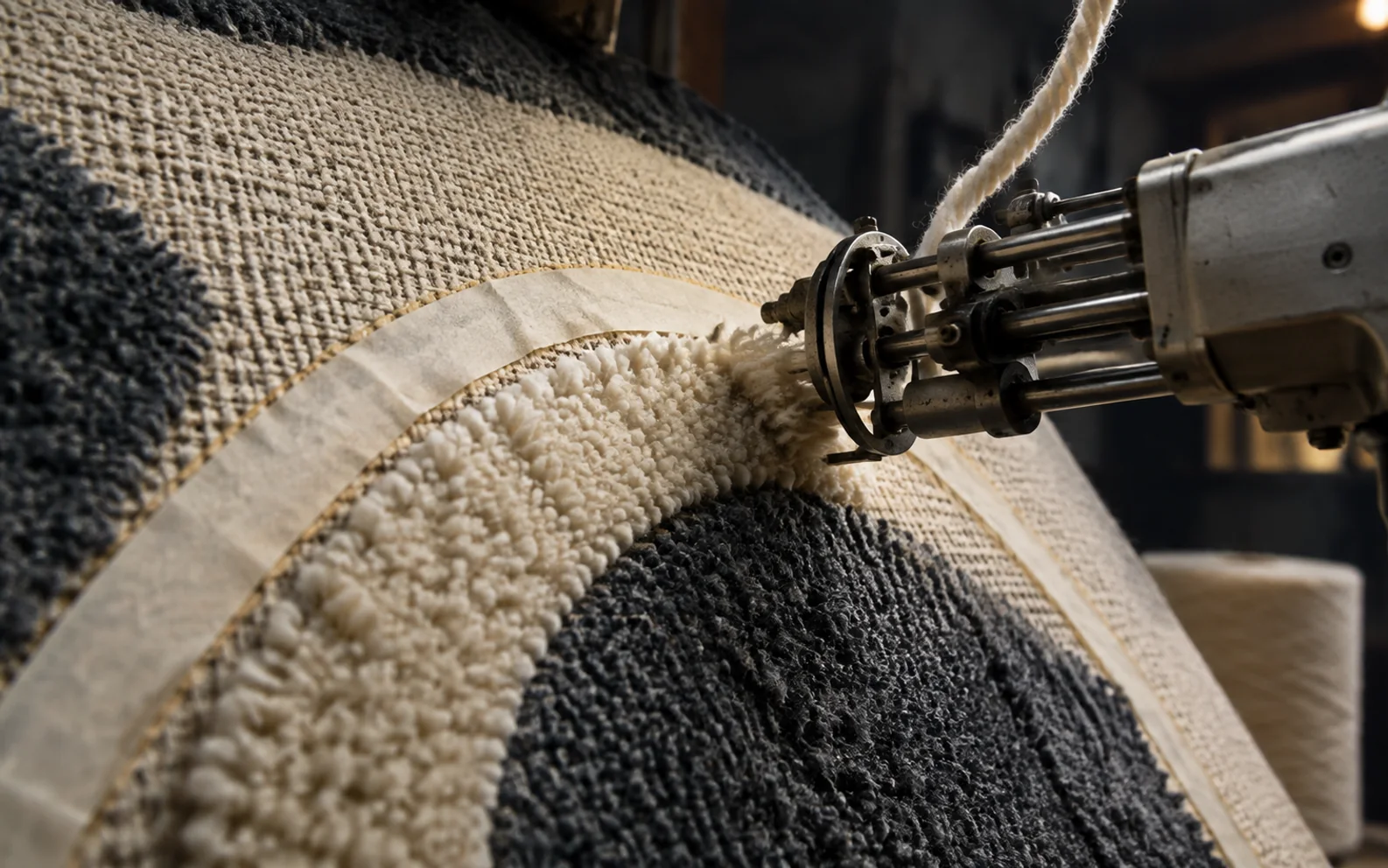
The first is to punch yarn through the backing along a one-to-one cartoon, so arcs and medallions follow the drawing. The cost is time — stitch by stitch, a large area occupies a long slot. The second is to cut shaped pieces and seam them, which is faster but leaves a thickness step. Lounges and lobby pieces that people look down into usually take the first route; corridors, read at eye height, can accept the second.
When a loom is still the right call
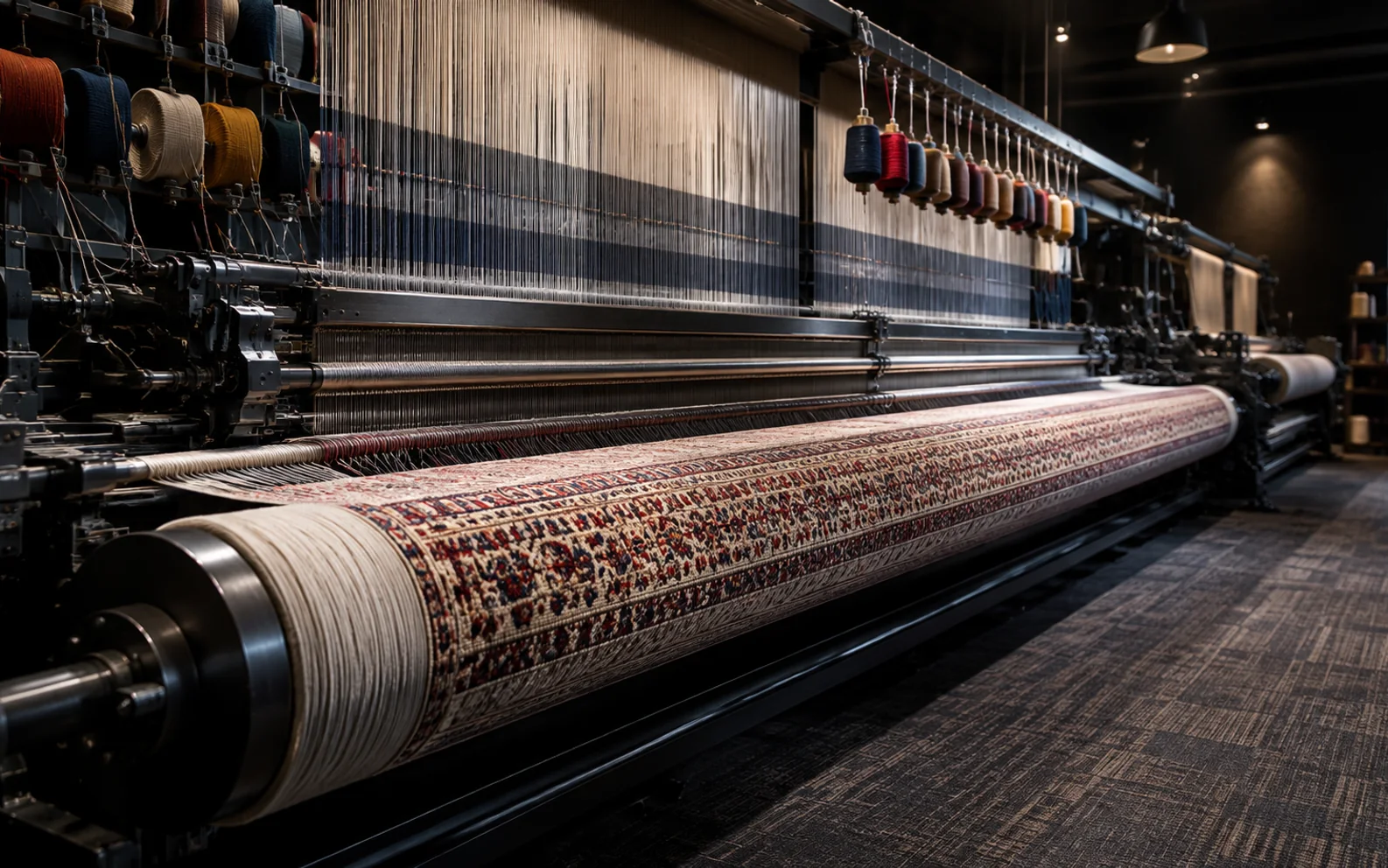
When area is large, pattern is regular and the programme is tight, a loom wins. An Axminster weaver runs four metres wide, changes colour under programme, holds density consistently and gives a dependable date for big floors. The Peace Hotel corridor — 984.4 square metres, twelve colours on a four-metre loom — is that decision recorded. Most hotels end up as a mix of the two.
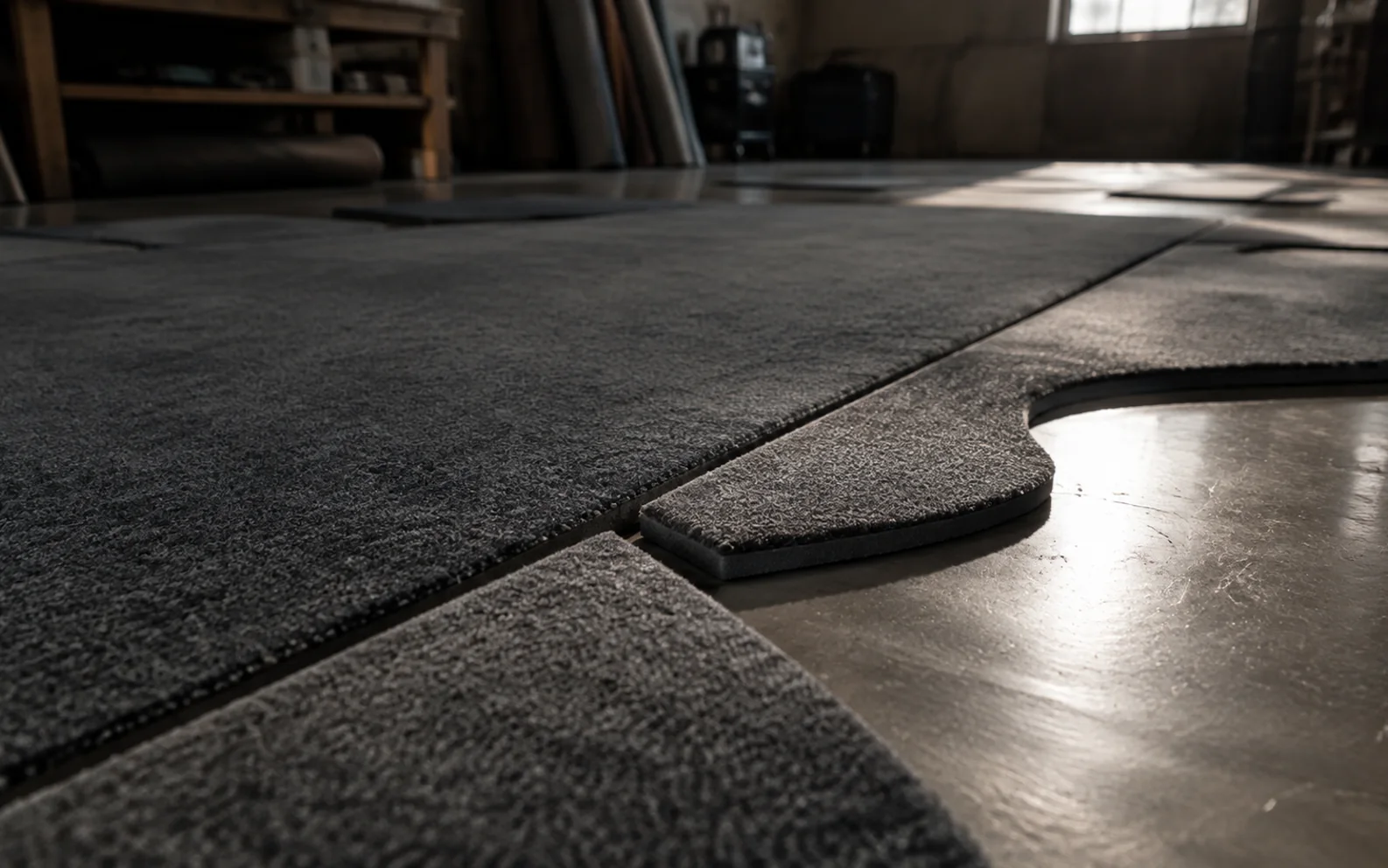
Carry the one-to-one sample into the room
The risk in a shaped design only appears at full scale. An arc that looks generous on paper can read crowded at one-to-one, and a colour boundary that looks clean in the workshop can blur under the room's own light. Lay the partial sample in the real space and read it twice, by day and by lamp, before confirming the pile layers. Skip this and the correction happens on a floor that is already installed.